
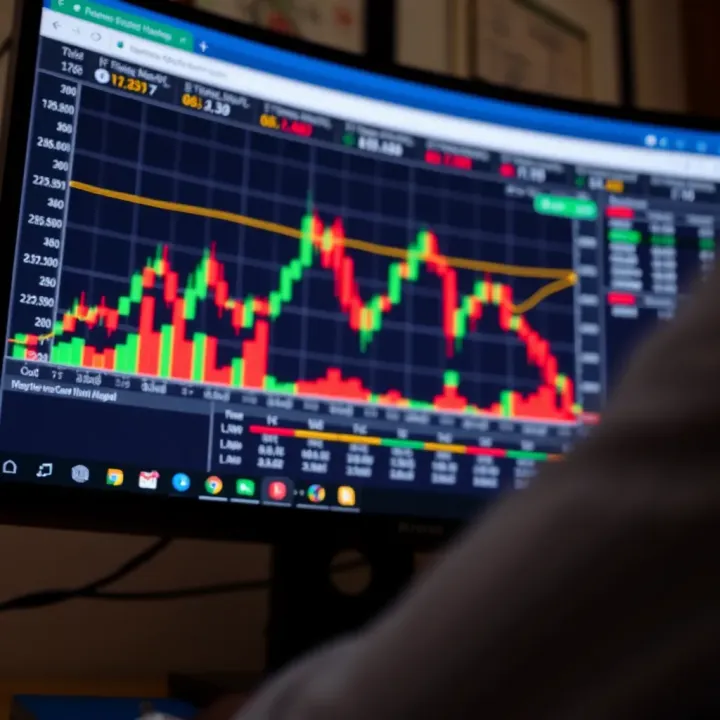
Trade View: A Guide for Nigerian Investors
📊 Discover how Trade View helps Nigerian investors analyse markets and make smart decisions despite economic challenges. Navigate local and global trends with ease.
Edited By
Jack Wilson
Forex trading, short for foreign exchange trading, involves buying and selling currencies in the global market. For Nigerian investors, it presents an opportunity to profit from currency value changes, particularly between the naira and other major currencies like the US dollar, euro, or pound sterling.
The forex market is the largest financial market worldwide, with a daily trading volume exceeding $6 trillion. Unlike the stock market, forex operates 24 hours a day, five days a week, allowing Nigerian traders to engage at times that suit their schedules—even outside business hours.
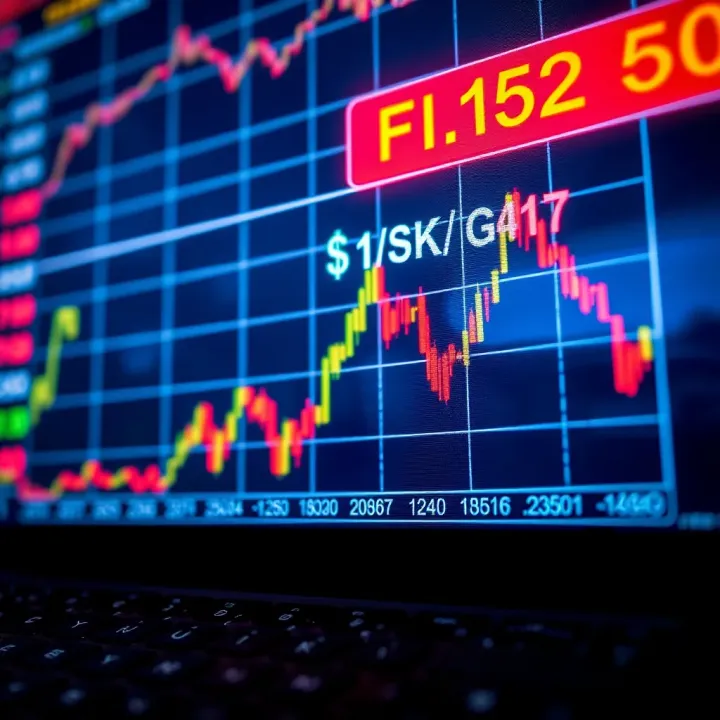
Understanding this market is essential before committing any funds. Currency prices fluctuate based on factors such as economic reports, political events, interest rate changes, and global trade flows. For example, when Nigeria’s oil revenue faces disruptions, the naira often weakens, creating potential trading opportunities.
Getting started demands more than opening an account. Nigerian investors must carefully select a reliable broker, ideally one registered with the Nigerian Securities and Exchange Commission (SEC) or recognised international bodies. Trustworthy brokers should offer transparent spreads, leverage options aligned with your risk appetite, and efficient deposit or withdrawal systems.
Managing risk is crucial in forex trading. Because leverage allows control over large trades with a small initial capital, losses can multiply quickly. Practical steps include setting stop-loss orders, limiting the amount risked on each trade to a small percentage of your capital, and continuously updating knowledge of market trends.
Forex trading requires discipline, a clear strategy, and ongoing education. It’s not a get-rich-quick scheme but a skill that Nigerian investors can develop with patience and practical experience.
Besides individual effort, being aware of Nigeria’s regulatory landscape helps protect your investment. The Central Bank of Nigeria (CBN), SEC, and occasionally the Nigerian Financial Intelligence Unit (NFIU) regulate aspects of forex trading to prevent fraud and money laundering.
In the following sections, we will explore how forex operates in Nigeria, detailed steps to start trading, risk control techniques, and how to navigate regulations effectively. This foundation will support you to trade forex wisely and confidently in Nigeria’s unique market environment.
Grasping forex trading's fundamentals is vital for any Nigerian investor keen on the currency market. This understanding helps you navigate its nuances and identify potential benefits and pitfalls relevant to Nigeria's economic backdrop.
Forex trading involves exchanging one currency for another, aiming to profit from fluctuating exchange rates. Take, for instance, a trader who buys US dollars (USD) with Nigerian naira (₦), hoping the USD strengthens against the naira. When this happens, selling the dollars back converts to more naira than initially spent.
Among the major currency pairs relevant to Nigerian investors, USD/NGN is the most prominent due to Nigeria's strong economic ties with the United States. The British Pound (GBP) and Euro (EUR) against the naira also attract attention, especially as imports and exports with Europe remain significant. Understanding these pairs helps Nigerian traders focus their strategies around currencies that influence local business and personal finance.
Globally, the forex market is the largest financial market, operating 24 hours from Monday to Friday. It spans centres from London to New York to Tokyo, allowing Nigerians the flexibility to trade almost any time, which suits those balancing forex with other jobs or businesses in Nigeria. This continuous cycle means market-moving news anywhere can impact currency values within minutes.
Online platforms have made forex accessible to Nigerians far beyond the reach of traditional banks or brokers. Platforms like MetaTrader 4 and local fintech services permit account opening, funding, and trading from smartphones—important in a country where mobile internet use surpasses fixed broadband.
Forex can supplement income for many Nigerians, especially amid intermittent formal-sector earnings. For example, a freelance graphic designer in Lagos might trade currencies after client work, using profits to cushion against irregular payments. However, this requires discipline and understanding to avoid reliance on risky short-term gains.
The frequent volatility of the naira drives interest in forex trading. The naira’s exchange rate swings affect daily living costs and business expenses, pushing investors to hedge against or capitalise on such fluctuations. This volatility means that timely forex trades can protect wealth or produce gains in unstable economic periods, but it also raises the stakes for inexperienced traders.
Success in forex trading demands knowing both market mechanics and Nigeria’s unique economic context. Proper knowledge lets investors maximise advantages and avoid common traps, ensuring trading acts more as an informed investment than mere speculation.
Understand currency exchange basics and how they relate to Nigerian naira
Focus on major pairs like USD/NGN for practical trading relevance
Use the global 24-hour nature of forex markets to your advantage
Leverage online trading platforms accessible in Nigeria
Recognise forex trading as a potential income supplement, not guaranteed wealth
Stay aware of naira volatility impacts on forex trading risks and opportunities
This foundational knowledge sets the stage for a well-informed approach to forex trading tailored for Nigerian investors.
Understanding the factors that sway forex markets helps Nigerian traders make informed decisions. Forex rates don't change randomly; specific economic indicators and global events shape currency values daily. Keeping an eye on these elements can give traders an edge, especially given the naira's sensitivity to both local and international influences.
Interest rates set by the Central Bank of Nigeria (CBN) and other global banks play a major role in forex pricing. When the CBN adjusts its Monetary Policy Rate (MPR), it affects the naira’s strength. For instance, if the CBN raises rates, Nigerian assets become more attractive to investors seeking higher returns, which can boost demand for naira and cause it to appreciate. Similarly, major central banks like the US Federal Reserve influence the USD, so traders watch these moves closely. Changes in rates signal shifts in economic conditions, pushing forex traders to adjust their positions accordingly.
Inflation impacts purchasing power and consequently the exchange rate. If Nigerian inflation rises sharply, the naira tends to weaken since rising prices erode currency value. Traders assess inflation reports to predict these effects. Unemployment rates reflect economic health too — increasing unemployment can signal economic slowdown and impact investor confidence. For forex traders, high unemployment coupled with high inflation could mean the CBN may tighten policy, affecting the naira and related pairs.
Locally relevant indicators not only guide traders but also shape market sentiment. Data points like oil production figures, Foreign Direct Investment (FDI) inflows, government revenue, and foreign reserves give insight into Nigeria’s economic stability. For example, a significant drop in oil output often leads to naira depreciation since oil revenues dominate Nigeria’s economy. Regularly tracking these Nigerian-specific indicators provides vital clues for timely trade decisions.
Local and international political events can jolt forex markets. In Nigeria, election periods or sudden policy shifts may trigger naira fluctuations due to uncertainty. Elsewhere, political instability in major economies can impact global confidence, causing shifts in currency markets. For example, any policy announcement from the U.S. or China affects not just their currencies but also emerging market currencies like the naira.
Oil price movements directly influence Nigeria’s forex market. Nigeria depends heavily on oil exports, so when crude prices fall, government revenue and foreign reserves dip, usually weakening the naira. Conversely, rising oil prices typically strengthen the naira. Forex traders watch global oil benchmarks like Brent crude as they signal potential currency shifts connected to Nigeria’s economic fortunes.
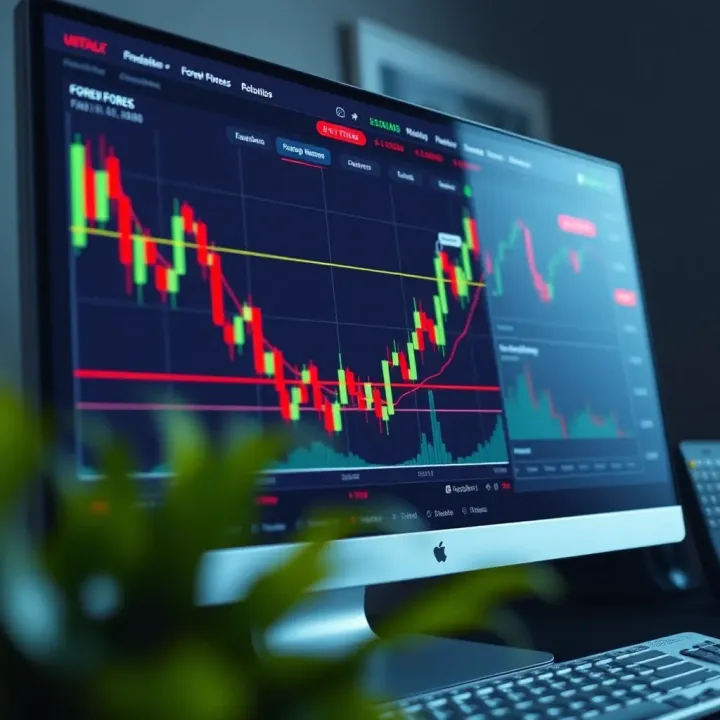
Tensions in key regions or changes in trade agreements impact currency values on a broader scale. For Nigeria, disruptions in global trade or sanctions on trading partners can alter forex demand. Likewise, geopolitical risks such as conflicts or embargoes in oil-producing areas can cause price spikes that indirectly shift the naira. Keeping tabs on these risks helps traders anticipate volatility and manage positions better.
Successful forex trading in Nigeria involves reading both economic reports and global news. Combining these insights makes trading less guesswork and more strategy-driven.
By focusing on these economic and geopolitical factors, Nigerian traders can better navigate the forex market and protect their investments against sudden currency swings.
Embarking on forex trading in Nigeria requires informed decisions from the very start to ensure safety and profitability. This section focuses on the nuts and bolts of getting started, guiding you through broker selection, account setup, and mastering trading platforms — all crucial steps tailored to the Nigerian investment environment.
Choosing a regulated broker is essential to protect your funds and trading integrity. Nigerian traders should prioritise brokers licensed by reputable authorities such as the Securities and Exchange Commission (SEC) Nigeria or international bodies like the Financial Conduct Authority (FCA) in the UK. Regulated brokers follow strict rules, offer transparency, and usually provide compensation schemes, unlike unregulated ones where the risk of scams or unfair practices rises sharply.
Both local and international brokers are available to Nigerians, but each comes with pros and cons. Local brokers familiar with Nigerian financial infrastructures may support naira deposits and withdrawals better, easing fund transfers without hefty conversion fees. On the other hand, well-known international brokers often provide more advanced platforms, wider currency pairs, and robust customer support but might require foreign currency funding.
When deciding on a broker, pay close attention to spreads, leverage, and trading platforms. Tight spreads reduce your trading costs — a ₦5 spread on a currency pair is far better than ₦20, especially for frequent trades. Leverage lets you trade bigger positions but increases risk; a sensible starting point could be 1:30 or 1:50. Also, ensure the broker supports popular platforms like MetaTrader 4 or 5, known for reliability and functionality.
Brokerage firms in Nigeria commonly require your National Identification Number (NIN) and Bank Verification Number (BVN) as part of their verification process. This strengthens security against fraud and complies with anti-money laundering policies. Having these documents ready speeds up account approval and builds trust between you and your broker.
Funding your forex account can be done in naira or foreign currencies, depending on your broker. Many brokers allow naira deposits through local bank transfers or mobile money platforms, which is more convenient and cost-effective. However, some trades require accounts funded in major currencies like the US dollar or euro because forex pairs are quoted in these currencies. Be mindful of conversion fees and exchange rates when moving your funds.
The availability of local payment methods like Interswitch, Quickteller, and even mobile wallets makes deposits and withdrawals smoother. Choosing brokers who support these platforms avoids delays and extra charges. For instance, funding your account via a direct bank transfer from First Bank or Access Bank is often faster and cheaper than international wire transfers.
MetaTrader 4 (MT4) and MetaTrader 5 (MT5) remain the most widely used platforms for forex trading due to their user-friendly interfaces and advanced charting tools. MT5 offers more features, including additional timeframes and order types, but both are excellent for Nigerian traders starting out. Knowing the ins and outs of these platforms is key to executing trades efficiently.
Mobile trading apps bring flexibility to trade from anywhere, be it Lagos traffic or the comfort of your bukateria. Desktop versions generally offer more detailed tools and faster execution, useful for traders who need deep analysis. Depending on your trading style, you may prefer one over the other or use both.
Learning to place trades correctly is vital. This includes understanding market orders, limit orders, and how to set stop-loss orders — a tool to limit potential losses. For instance, if you buy the USD/NGN pair at ₦500 and set a stop-loss at ₦495, your trade will automatically close if the rate drops to ₦495, protecting your capital in volatile markets.
Starting with a reliable broker, smooth account setup, and mastering trading platforms lays a solid foundation for your forex journey in Nigeria. Each step reduces risks and positions you for better trading outcomes.
By paying attention to these practical aspects, Nigerian forex traders can build a safer and more effective trading experience tailored to local realities and international standards.
Managing risks effectively is essential for every trader, especially in Nigeria’s volatile forex environment. Without proper risk controls, even seasoned traders can lose substantial capital. Success in forex trading does not only hinge on making profits; preventing heavy losses is equally critical. This section outlines common risks Nigerian traders face and practical risk management techniques that can safeguard investments and improve trading outcomes.
Forex markets can swing sharply within minutes. While volatility creates opportunities, it also poses serious dangers. Nigerian traders often use leverage—borrowing funds from brokers to trade larger positions—to amplify gains. However, leverage magnifies losses just as much. For instance, using 50:1 leverage means a 2% adverse price movement wipes out your entire capital. In volatile markets influenced by naira fluctuations or geopolitical tensions, reckless leverage can quickly lead to margin calls and forced liquidation.
Unfortunately, scam forex schemes have proliferated in Nigeria, promising quick riches but leaving investors with empty pockets. Unscrupulous operators might impersonate legit brokers or offer fake training courses. Nigerian regulators like the SEC and CBN have repeatedly warned about unregistered platforms. Falling victim to such scams wastes money and sours genuine trading opportunities. Traders must verify brokers’ licences, avoid platforms with unrealistic promises, and steer clear of schemes demanding upfront large deposits.
Emotions can easily cloud judgement in forex trading. Overtrading—making too many trades driven by greed or fear—often leads to losses. For example, after a winning streak, some traders might become overconfident and open excessive positions. Similarly, trying to recover losses hastily can lead to rash decisions. Nigerian traders operating from home often battle distractions and impatience, which worsen emotional reactions. Developing discipline and sticking to a trading plan helps reduce these pitfalls.
Stop-loss orders limit potential losses by automatically closing trades at predefined price points. Take-profit levels lock in gains once a favourable price is reached. Using these tools prevents emotional decisions in volatile markets. Suppose you buy USD/NGN at ₦410 and set a stop-loss at ₦405; if the price falls to that level, the trade closes to cap your losses. These orders are crucial amid the erratic naira fluctuations and help maintain control over outcomes.
Avoid putting all your capital in a single trade or currency pair. Diversification across different pairs, such as GBP/USD, EUR/USD, and USD/NGN, reduces exposure to one-sided market moves. Controlling position size based on your total trading capital ensures no single loss becomes catastrophic. For example, risking only 2% of your ₦100,000 capital per trade protects you from blowouts and allows more trades without emotional strain.
Demo accounts simulate real forex trading without risking actual money. Nigerian traders can use these platforms to test strategies, understand market behaviour, and learn platform operation. Practising on demo accounts before investing real naira builds confidence and sharpens skills. For instance, beginning traders often suffer losses due to lack of experience; demo trials help minimise those early pitfalls.
Managing risk is not optional in forex trading; it is the foundation on which consistent success rests. Nigerian investors who take risk management seriously lay stronger grounds for sustainable profits.
Navigating the regulatory framework is critical for Nigerian forex traders. Understanding the role of agencies like the Securities and Exchange Commission (SEC) and the Central Bank of Nigeria (CBN) helps investors avoid legal pitfalls and trade confidently. Knowing the tax implications and filing requirements ensures you comply with Nigerian laws while maximising profits.
Both the SEC and CBN regulate forex activities in Nigeria to safeguard investors and maintain market integrity. Brokers operating in Nigeria must obtain licences from these bodies, demonstrating compliance with financial standards including capital adequacy and anti-money laundering (AML) measures. For traders, this means dealing with authorised platforms reduces exposure to fraud or unregulated schemes. For example, a broker like FXTM is registered with SEC Nigeria, offering traders peace of mind.
The CBN supervises foreign exchange dealings to align with national monetary policies. Nigerian traders must respect currency controls, especially when funding accounts or repatriating profits. Failure to engage authorised channels when exchanging naira for foreign currencies can attract penalties or restriction.
The government has intensified efforts to clamp down on unlicensed forex operators through raids and public warnings. The SEC regularly updates its list of registered brokers to help traders distinguish legitimate firms. Recently, SEC announced actions against fraudulent schemes promising unrealistic returns, which have snagged many unsuspecting Nigerians.
CBN also monitors forex transactions to prevent illicit capital flows that undermine the naira. Illegal platforms often bypass reporting obligations, increasing risks for traders caught up in scams. Being aware of these enforcement actions helps traders avoid unregulated outfits that might vanish with their funds.
Regulation means brokers must hold client funds separately and provide transparent transaction records. These measures reduce the chance of fund misappropriation. Additionally, authorised brokers often offer dispute resolution channels backed by SEC oversight.
Trader protection also includes adherence to know-your-customer (KYC) rules that help prevent fraud. For instance, requiring Nigerian Identification Number (NIN) and Bank Verification Number (BVN) ensures accountability and deters identity theft within the trading community.
Staying within regulatory boundaries not only reduces risk but builds trust in your trading endeavour.
Forex earnings are subject to tax under Nigerian tax laws, typically treated as personal income for individuals or business income for registered companies. The Federal Inland Revenue Service (FIRS) expects traders to pay income tax on profits, including gains from speculative transactions. Missing tax payments could invite penalties or audits.
Forex traders who run trading as a business should consider registering with the appropriate tax authorities and keeping records to support accurate declarations. Sole traders operating informally may still be liable for pay-as-you-earn (PAYE) tax depending on their overall income.
Nigerian forex traders must file annual tax returns with FIRS, disclosing profit or loss from trading activities alongside other income sources. This filing is essential to avoid legal trouble and ensure compliance with tax laws. Traders might also be required to submit periodic Value Added Tax (VAT) returns if applicable.
For companies involved in forex trading, the requirement extends to audited financial statements and adherence to company income tax guidelines. Engaging a professional accountant familiar with Nigerian tax regulations can smooth this process.
Maintaining clear documentation of all trades, deposits, withdrawals, and broker statements is crucial. Good record-keeping enables accurate tax reporting, helps monitor trading performance, and supports dispute resolution if questions arise.
Examples of useful records include transaction histories from trading platforms, bank statements showing funding and withdrawal, and correspondence with brokers. Organising these documents digitally or physically ensures you can respond to tax queries or regulatory reviews without stress.
Accurate records are the backbone of lawful trading and make managing your forex profits far easier.
Understanding the legal and tax landscape around forex trading in Nigeria helps you avoid pitfalls and focus on building a sustainable trading practice. Always prioritise compliance alongside your trading strategies.
📊 Discover how Trade View helps Nigerian investors analyse markets and make smart decisions despite economic challenges. Navigate local and global trends with ease.
Discover how meta trading works for Nigerian investors 📈, explore top platforms, smart strategies, risks, and Nigeria's regulations to trade confidently.
Explore Independent Reserve—safe and easy crypto exchange trusted by Nigerian investors 🇳🇬. Learn fees, security, services, and how it stands against other platforms today!
📈 Stay updated on today's Bitcoin price and what it means for Nigerian investors. Understand global and local factors shaping ₦-value and learn smart moves to trade safely.
Based on 8 reviews