

Understanding Tapswap Code in Nigeria
🔍 Understand how today's Tapswap code powers contactless payments in Nigeria, its security features, practical tips, and what businesses must know for smooth transactions.
Edited By
Sophie Bennett
The foreign exchange (forex) market never sleeps, running non-stop across various global time zones. Understanding its trading sessions is key to making informed decisions, especially for Nigerian traders who face unique challenges like naira volatility and fluctuating liquidity.
Forex sessions are periods during the day when specific financial centres are active. The four main ones are the Sydney, Tokyo, London, and New York sessions. Each is characterised by different levels of trading activity, volatility, and market behaviour, influenced by regional economic news and business hours.
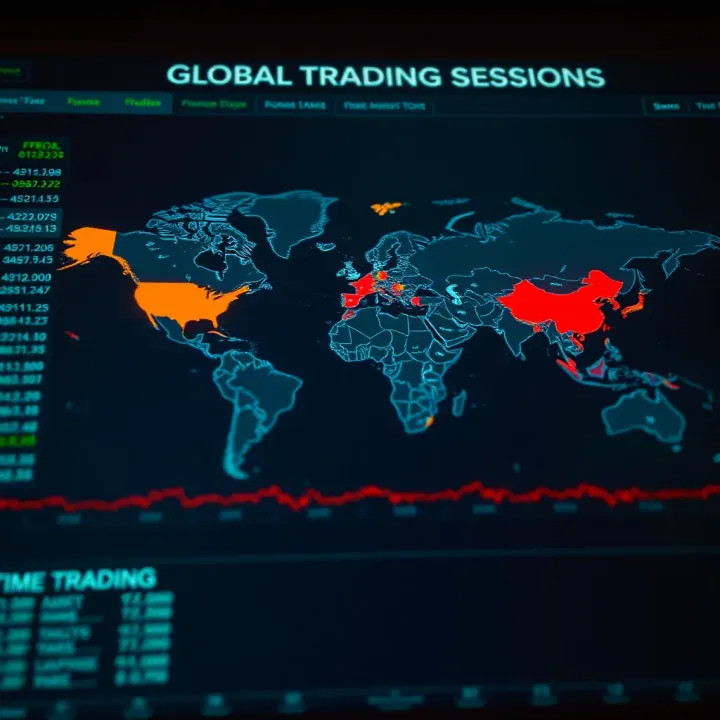
Timing is everything. For instance, the London session, running roughly from 7 am to 4 pm GMT, overlaps partially with New York’s session from 12 pm to 9 pm GMT. This overlap often triggers the highest volatility and liquidity, offering Nigerian traders opportunities for quicker price movements. Conversely, the Sydney session between 9 pm and 6 am GMT tends to be quieter, making it less attractive for traders seeking active markets.
Knowing which session is live helps traders pick the best time to manage risks and capitalise on market movements.
For Nigerian traders working with West Africa Time (WAT, UTC+1), the London session begins at 8 am local time, extending into the afternoon. This aligns well with business hours, making it a prime slot for active trading. The New York session starts around 1 pm WAT and runs till 10 pm, suitable for those who trade after work.
Seasonal factors also influence session dynamics. During Nigeria’s ember months, market volatility tends to increase due to global year-end adjustments and increased trading activities by multinational corporations. Traders need to be alert during session overlaps in these periods.
Practical application involves choosing trading hours based on strategy: scalpers favour London-New York overlap for volatility, while long-term investors may prefer calmer Tokyo or Sydney sessions. Nigerian traders should also factor in availability of reliable internet and power supply when scheduling their sessions.
By mastering forex sessions and syncing them with local conditions, Nigerian traders can boost their chances of success and avoid unnecessary risks.
Understanding forex trading hours is essential for anyone serious about trading currencies. Forex, unlike stock markets, operates continuously during weekdays, which means you can trade day or night depending on market sessions. This 24-hour cycle arises because global financial centres open and close at different times. Recognising when these hours overlap can help traders spot the most active periods with higher liquidity and volatility.
Knowing forex hours also allows you to plan your trading schedule effectively. For example, if you trade in Nigeria, converting session times from major hubs like London or New York to West Africa Time (WAT) ensures you catch the best opportunities without missing out due to time differences. This knowledge helps optimise trade entries and exits while managing risk during quieter periods.
Forex markets are spread worldwide, covering major financial centres including Tokyo, London, New York, and Sydney. Because these centres are in different time zones, when one market closes, another is just opening. This setup keeps forex trading active almost all the time from Monday morning in Asia until Friday evening in New York. For Nigerian traders, it means there is always a market open somewhere to facilitate transactions and price discovery.
This global structure also reflects how economies are connected. Currency prices fluctuate continuously based on news, economic data, and geopolitical events in different regions, which happen around the clock. It’s why forex is often called the most liquid and dynamic market globally.
Unlike stock markets that generally work set hours and close on public holidays, forex runs 24 hours on business days. Stock exchanges like the Nigerian Stock Exchange (NSE) or London Stock Exchange operate during fixed hours, after which trading halts until the next day. Forex’s continuous operation offers more flexibility and multiple chances to trade, especially for people balancing work and trading like many in Nigeria.
However, this nonstop nature also calls for caution. Liquidity and volatility can drastically change throughout the day, and some periods may have wider spreads or less volume, increasing trading risk if you’re not careful.
Time zones determine when each forex session starts and ends. For instance, the London session opens at 8 am GMT, which is 9 am WAT, while the New York session starts at 1 pm WAT. Because Nigeria is in West Africa Time (GMT+1), converting market hours from other parts of the world is crucial.
Failing to adjust for these differences can lead to missed opportunities or trading during inactive hours. For example, trading the European session during Nigerian night-time isn’t feasible for most retail traders, but understanding overlaps like the London-New York session lets you focus on more liquid periods without staying up late unnecessarily.
A forex session refers to the trading period when a particular financial centre is active. The major sessions are Asian (Tokyo), European (London), North American (New York), and Sydney. Each session features distinct market behaviour shaped by regional economic data releases, trader activity, and volume.
Sessions help traders anticipate patterns; for example, Tokyo session tends to see pairs like USD/JPY and AUD/USD move more, while London affects EUR/USD and GBP/USD heavily. Knowing sessions aids in choosing the right currency pairs and timing trades accordingly.
Forex sessions generally last about eight hours, but there are overlaps between them that create periods of higher liquidity and greater price swings. The busiest overlap globally is between London and New York, running roughly from 2 pm to 5 pm WAT. During this time, many traders find tighter spreads and more predictable moves.
On the other hand, the Sydney session, though quieter, leads to the Asian session as it overlaps with Tokyo early in the day. A Nigerian trader tracking these overlaps can pick the most volatile or calm times depending on their trading strategy.
West Africa Time (WAT) is UTC +1, and adjusting international session hours to WAT is vital for Nigerian traders. For example:
Tokyo session: Roughly 2 am to 11 am WAT
London session: 8 am to 5 pm WAT
New York session: 1 pm to 10 pm WAT
Sydney session: 10 pm to 7 am WAT
Despite the overlapping hours, Nigerians often focus on the London and New York sessions since they align conveniently within the working day. Using WAT ensures all trading decisions relate directly to local time, preventing confusion and enhancing discipline.
Efficiently managing your trade schedule around these forex sessions can increase your chances of making well-timed entries and exits while helping you avoid risky low-liquidity hours.
Understanding these basics can give Nigerian traders an edge in the global forex market by syncing their activities with the most active and profitable times.
Understanding the four main forex sessions is essential for traders looking to optimise their strategies. Each session brings unique market traits influenced by economic activity, time zones, and trader behaviour. For Nigerian traders, knowing these distinctions helps identify the best trading times for specific currency pairs and anticipate market moves.
Typical trading hours: The Asian session begins around 12:00 am and runs until 9:00 am West Africa Time (WAT). It opens with Tokyo's market followed closely by Hong Kong, which energises trading flows in regional currencies during these hours. This session suits traders who prefer early-morning trades without competing with more volatile European or US sessions.
Currency pairs active: Traders will notice heightened activity in pairs involving the Japanese yen (JPY), Chinese yuan (CNY), and Australian dollar (AUD). Pairs like USD/JPY, AUD/USD, and EUR/JPY tend to exhibit more frequent price movements, making this session ideal for those focusing on Asian and Pacific currencies.
Market liquidity and volatility: Liquidity during the Asian session is moderate compared to other sessions, but volatility can spike after major economic releases from Japan or China. For instance, Tokyo Stock Price Index (TOPIX) announcements often move JPY pairs. Traders should watch out for lower liquidity late in the session, which can widen spreads and affect order executions.
Timing of the London session in WAT: The London session runs from about 8:00 am to 5:00 pm WAT, aligning well with Nigerian working hours. It is a prime time for Nigerian traders to engage actively in the markets without disrupting daily routines.
Major currencies involved: This session commands high activity in the British pound (GBP), euro (EUR), and Swiss franc (CHF). Currency pairs like GBP/USD, EUR/USD, and EUR/GBP are heavily traded, reflecting Europe's economic footprint.
Significance in forex volume and price movements: London accounts for almost 30% of global forex trading volume daily. Price swings are more pronounced during this session due to European economic releases and bank activities. Nigerian traders benefit from tighter spreads and improved liquidity here.
Session opening and closing times: The New York session operates from 1:00 pm to 10:00 pm WAT, overlapping partially with the London session. This schedule captures the US market's opening bell and close.
Impact on currency pairs and USD volatility: Since the US dollar dominates international trade, USD pairs experience their highest activity and volatility in this window. Currency pairs such as USD/CAD, USD/JPY, and GBP/USD often show sharp moves responding to US economic data like Non-Farm Payroll or Federal Reserve announcements.
Overlap with London session: The critical period between 1:00 pm and 5:00 pm WAT is when London and New York markets overlap. This overlap leads to peak liquidity and volatility, offering Nigerian traders valuable opportunities for breakout and trend-following strategies.
Session hours related to Nigerian time: The Sydney session occurs between 10:00 pm and 7:00 am WAT. Although it falls late at night for Nigerian traders, it starts the global forex week and provides early signals for the day ahead.
Liquidity and market activity: This session features lower liquidity and volume compared to others but can become more active when significant economic data arrives from Australia or New Zealand. Currency pairs like AUD/USD and NZD/USD are mostly influenced here.
Relevance for traders in Nigeria: While the session may not be the most active, Nigerian traders who keep an eye during these hours can capitalise on early price trends before the major sessions kick off. Automated trading systems and alerts also help those unwilling to trade overnight.
Knowing these forex sessions helps you not only pick the best times to trade your preferred currencies, but also manage risk by avoiding low-liquidity hours when spreads widen.
By paying attention to session timings and characteristics, Nigerian traders can improve their trading timing, enhance profitability, and avoid common pitfalls linked to market inactivity or sudden volatility shocks.
Understanding how forex sessions impact market behaviour is key for any serious trader. Each session has distinct patterns of activity, liquidity, and volatility, which influence price movements and trading opportunities. Nigerian traders, in particular, can benefit by tailoring strategies to session dynamics to enhance timing and reduce risks.
Forex markets experience peaks and lows throughout the day as different sessions open and close. For example, the London session brings substantial trading volume, especially because it overlaps with the New York session for a few hours. This overlap usually means increased volatility and better liquidity. Conversely, when the market shifts towards less active periods—like late hours in Nigeria between the New York close and Sydney open—trading activity drops, and price movements often soften.
For a Nigerian trader, knowing these rhythms is practical. If you trade during high volatility periods, you stand a better chance of capturing significant price swings. On the other hand, quieter times may offer limited movement but could be an opportunity for safer, range-bound strategies.
Liquidity directly affects trading costs such as spreads and slippage. In high-liquidity periods—like during the London-New York overlap—spreads tend to narrow, sometimes dropping to fractions of a pip on major pairs. Reduced spreads lower entry and exit costs, which is valuable for frequent traders or scalpers.
In contrast, low liquidity sessions often see wider spreads and increased slippage. For example, trading USD/NGN outside peak Nigerian market hours can be costly due to illiquidity. Traders should monitor market depth carefully and avoid placing large orders during these times to prevent unfavourable price execution.
The Nigerian naira (₦) is mostly traded against the US dollar (USD) during the Nigerian business day, aligning roughly with the London and New York sessions. This means liquidity and volatility in USD/NGN pairs peak during these hours when banks and forex bureaux are most active. Trading naira pairs outside this window risks encountering low liquidity and wider spreads, which may drastically affect profitability.
USD, EUR, and GBP dominate forex volume, and their activity surges during the London and New York sessions. EUR and GBP pairs peak in the morning to early afternoon Nigerian time as London opens, while USD pairs become even more volatile as New York starts trading. For example, GBP/USD tends to show brisk price moves from 9 am to 3 pm WAT, coinciding with these overlapping sessions.
By focusing on the peak hours for key currency pairs, Nigerian traders can exploit higher volatility and tighter spreads. For instance, scalpers may prefer the London-New York overlap for quick trades on GBP/USD or USD/NGN, while swing traders might target the full London session to catch bigger moves.
Meanwhile, risk-averse traders can adjust by trading during the early Asian or Sydney sessions when market moves are less erratic. Combining session knowledge with technical analysis offers a systematic way to improve trade outcomes.
This overlap is widely viewed as the most active period in forex markets. Both markets trading together produce the largest volume, bringing sharp price swings and potential breakthroughs. Nigerian traders should watch for economic releases or unexpected news during this time, as market reactions tend to be swift and significant.
Though less intense than London-New York, the Tokyo-London overlap still presents valuable moves, especially on JPY pairs like USD/JPY and EUR/JPY. It usually occurs in the late evening Nigerian time, offering a second window of opportunity outside typical business hours.
Session overlaps often trigger breakouts because liquidity surges allow market participants to challenge support and resistance levels more effectively. For traders, this means a higher chance of catching strong trends or reversals.
A practical approach is to identify key price levels before the overlap and enter trades when breakouts occur, confirming moves with volume indicators or momentum oscillators. This tactic suits day traders aiming to capitalise on short-term volatility.
Timing your trades according to forex session overlaps boosts your chances of entering markets at moments when liquidity and price action are at their best.
Mastering session timing helps Nigerian traders optimise entry and exit points, manage risk better, and increase overall trading effectiveness. By appreciating how market behaviour shifts with sessions, you can adapt your strategies to local realities and global market flows.
Understanding and managing forex session timings is vital for Nigerian traders aiming to optimise their strategies and enhance profitability. Since forex markets operate across multiple time zones, adapting session hours to local West Africa Time (WAT) helps you align your trading activities with periods of high liquidity and volatility. These tips focus on practical steps you can take to navigate session timings effectively, avoid common mistakes, and maximise opportunities.
Converting global forex session hours to Nigerian time is straightforward but essential. For example, the London session typically runs from 8 am to 4 pm GMT, which corresponds to 9 am to 5 pm WAT. Knowing this, you can plan to trade during London’s peak hours when market activity and volume spike.
Handling daylight savings time (DST) differences is also important. Nigeria does not observe DST, whereas the UK and the US do. This means London’s session shifts by an hour during British Summer Time, typically from late March to late October, moving the trading hours to 10 am to 6 pm WAT. Similarly, New York’s session moves an hour depending on American DST. By keeping a simple calendar noting these changes, you avoid trading blind and can adjust your schedule to catch key market moves.
When selecting a broker, focus on platforms that clearly display session timings relevant to your local time. Features like session indicators, countdown timers, and heat maps showing active markets can guide your decisions. Platforms such as MetaTrader 4/5 and TradingView often offer tools that highlight session overlaps and volatility periods – crucial for Nigerian traders aiming to catch breakout moves between the London and New York sessions.
Spread and commission costs vary across sessions. During high liquidity sessions like London-New York overlap, spreads tend to be tighter, lowering trading costs. On the flip side, off-peak sessions usually witness wider spreads and less optimal pricing. Choose a broker that offers competitive spreads especially during volatile trading hours and transparent commission structures. This ensures your profits aren’t eaten away by transaction costs, especially when trading frequent short-term strategies.
Balancing your trading hours with work, family, and other commitments is critical to sustainability. If you work a 9-to-5 job, the London session from 9 am to 5 pm WAT fits nicely into your day. However, catching the early New York session requires waking early or late-night trading, which many Nigerians find challenging regularly. Identify your peak focus periods and stick to those, focusing on the most active sessions within your availability.
Managing risks during low liquidity times, typically in the Asian or Sydney sessions, is also crucial. These periods tend to have wider spreads, higher slippage, and often erratic price movements – not ideal for Nigerian traders who may not monitor markets continuously. Avoid placing large trades in these sessions or use conservative stop-losses and position sizing to limit exposure while liquidity is less guaranteed.
Being punctual with session timings and understanding their local impacts can reduce surprise losses and open more strategic trading windows for Nigerian investors.
In summary, practical management of forex sessions in line with Nigerian time and lifestyle improves trading discipline, sharpens market focus, and enhances profitability. Adaptation to session timing, choosing the right broker features, and aligning trades with your daily routine form the cornerstone of successful forex trading in Nigeria.
Understanding the timing and characteristics of forex sessions is vital for traders in Nigeria aiming to improve their results. By knowing when markets are most active or quiet, you can better plan your trading to avoid unnecessary risks and maximise profit opportunities. This knowledge helps to fine-tune entry and exit points, manage spreads, and anticipate market volatility based on session overlaps.
For Nigerian traders, being aware of forex sessions means understanding when liquidity spikes and how currency pairs behave during those times. For instance, the London and New York session overlap between 2 pm and 5 pm WAT is often the most volatile period for major pairs like USD/EUR or GBP/USD. Trading during this window can offer more opportunities due to higher activity but requires caution because of sudden price swings. Similarly, the Asian session tends to be quieter but can be ideal for trading currency pairs involving JPY or AUD with tighter spreads.
Avoiding common pitfalls linked to session timing is equally important. Trading during low liquidity hours—like late in the night Nigerian time—can cause wider spreads and slippage, leading to costly mistakes. Nigerian traders sometimes ignore time zone differences or daylight savings adjustments in Europe and the US, which can shift session hours unexpectedly. Such oversights might result in missed opportunities or unexpected losses when trades slip due to lower market depth.
Regularly tracking session timings alongside market news should be part of every trader’s routine. Global events affecting currencies—like Federal Reserve announcements or European Central Bank policy updates—usually align with session hours, influencing volatility. For example, a CBN policy announcement may impact the naira during Nigerian daytime, but major plays on USD pairs happen during London and New York sessions. Staying informed allows you to anticipate moves rather than react after the fact.
Using your growing session knowledge to sharpen trading strategies is crucial. If you notice that the naira tends to weaken during Asian sessions due to lower liquidity, you might avoid active trading in that window and focus instead on the European session when the market is more liquid. Alternatively, employing breakout strategies during session overlaps can increase chances of capturing strong trends. Always adjust your risk management depending on the typical behaviour of each session to maintain profitability.
Being smart about forex sessions means less guesswork and more strategy; for Nigerian traders, this translates into better timing, smarter decisions, and real gains.
🔍 Understand how today's Tapswap code powers contactless payments in Nigeria, its security features, practical tips, and what businesses must know for smooth transactions.

Explore binary trade in Nigeria 📊: Learn how it works, discover key strategies, understand risks & benefits, plus vital Nigerian regulations to trade smartly.
Discover how to pick the best forex signal app in Nigeria 📱 Get tips on reliable alerts, features to watch, risks, and boosting your trading success.
Discover how Nigerian traders can spot the best Forex signals on Telegram 📈. Learn key features, top providers, and tips for smarter trading decisions.
Based on 11 reviews