
Understanding Deriv Synthetic Indices for Nigerian Traders
Explore Deriv synthetic indices trading tailored for Nigerian traders 📈. Learn how they mimic real markets, risks for our ₦ economy, and smart local trading tips.
Edited By
Charlotte Green
Synthetic indices imitate the movements of real financial markets but without being tied to actual assets like stocks or commodities. They offer Nigerian traders an alternative way to engage with market dynamics every single day, 24/7, unlike traditional markets which might close during weekends or public holidays.
At their core, synthetic indices are generated through algorithms designed to mimic price fluctuations based on statistical patterns. For example, a popular synthetic index might simulate volatility levels similar to what you’d find in forex or stock markets, but it’s purely digital and controlled, unaffected by real-world news or economic reports.
This feature makes synthetic indices appealing to traders who want consistent exposure without worrying about sudden geopolitical shocks or economic announcements disrupting their strategies. That said, because these indices do not represent actual assets, their price movements depend solely on the underlying algorithm, which also means some risks differ compared to trading traditional markets.
Continuous availability: Trade any time of the day or night, every day.
Predictable volatility cycles: The algorithms often create patterns of highs and lows, allowing technical traders to develop strategies.
Isolation from real-world events: Prices don’t react to news but to programmed behaviour.
Nigerian traders interested in synthetic indices can access them through platforms supporting synthetic products, such as Deriv or other brokers regulated internationally but open to Nigerians. Before trading, understanding the algorithmic nature and managing risk carefully is vital.
Synthetic indices offer a unique market experience, blending digital innovation with trading opportunities. However, knowing how they operate and their limits ensures informed decisions and protects your ₦ investment.
In the upcoming sections, we will break down how synthetic indices work, explore trading strategies suitable for Nigerian markets, review platforms offering these products, and discuss local regulatory considerations affecting traders.
This practical guide aims to equip you with the knowledge necessary to navigate synthetic indices confidently and make the most of their trading potential in Nigeria.
Understanding synthetic indices is key for any trader looking to explore alternative markets beyond traditional financial exchanges. Unlike traditional assets such as stocks or forex, synthetic indices are artificially created to simulate market behaviour. This makes them particularly relevant for Nigerian traders seeking markets that operate independently of real-world economic events, offering both unique opportunities and challenges.
Synthetic indices are financial instruments designed to mimic the price movements of hypothetical or artificial markets. These indices are not tied directly to any physical asset or commodity, but instead rely on mathematical algorithms and random number generators to produce price changes. For example, a synthetic volatility index might simulate daily price movements to reflect market risk levels, which traders can speculate on without the complications of actual market forces.
This concept allows continuous trading, often available 24/7, unlike traditional exchanges that close at specific hours. For Nigerian traders, this can mean flexibility to trade outside local market hours, which is practical given challenges like power outages or daytime work commitments.
Traditional markets, such as the Nigerian Stock Exchange (now NGX), depend heavily on economic indicators, company performance, and geopolitical factors. Synthetic indices, by contrast, do not rely on actual economic developments or corporate earnings. Instead, their behaviour is controlled mathematically, leading to consistent market conditions unaffected by real-world events.
This difference means synthetic indices avoid surprises like policy shocks or sudden commodity price swings. For instance, while the naira exchange rate might fluctuate with government policies, synthetic indices remain steady in their operation. However, this also implies that trading synthetic indices demands a different approach since classical fundamental analysis has little to no role.
Price movements in synthetic indices come from algorithms designed to replicate market volatility and trends over time. These algorithms use complex simulations to generate random yet patterned price changes, aiming to offer fair and predictable outcomes for traders. The underlying system ensures no external economic news can cause unexpected spikes or crashes.
For example, a synthetic crash index may exhibit sudden downswings similar to a real market crash but follows programmed probabilities rather than real economic crises. This coded randomness creates an environment where technical analysis—as practiced on levels of support, resistance, and trend lines—becomes the main tool for decision-making.
Synthetic indices provide Nigerian traders access to consistent market simulations that run around the clock, making them a flexible choice when traditional market access is limited by local conditions like daylight hours and infrastructural issues.
In summary, synthetic indices combine practical benefits such as continuous availability and independence from global economic events, with the need for tailored trading strategies that focus on technical patterns and algorithmic behaviour rather than fundamental analysis. Traders in Nigeria should consider these factors carefully to exploit the potentials of synthetic indices effectively.
Trading synthetic indices presents a unique set of benefits and drawbacks that Nigerian traders should carefully consider before engaging. These markets are not tied to traditional financial assets but instead simulate price movements, offering opportunities while posing specific challenges.
Synthetic indices operate 24/7, unlike the typical Nigerian stock market or commodity exchanges that close after normal business hours. This means Nigerian traders can enter or exit positions at any time, accommodating those who trade around work or other commitments. For instance, a trader might analyse markets late at night after their day job or during off-peak hours in Lagos traffic. This flexibility removes the boundaries of time zones, making trading more accessible.
Since synthetic indices run independently of real-world markets, they aren’t directly affected by geopolitical crises, economic data releases, or sudden disruptions like oil price shocks. In Nigeria, where global oil prices impact economic stability heavily, synthetic indices offer a buffer. For example, during sharp naira fluctuations tied to forex market turmoil, synthetic indices remain stable in their simulation, enabling traders to focus purely on market trends within the platform rather than unpredictable external shocks.
Synthetic indices often allow small initial deposits and micro trades, making them attractive for Nigerian traders who may not have access to large amounts of capital. Platforms usually permit trades as low as ₦500 or ₦1,000, lowering the barrier to entry. This aspect is especially important given the economic challenges and power supply issues affecting many Nigerians; with minimal capital, one can still explore trading opportunities without excessive risk exposure.
Synthetic indices are typically offered by unregulated or offshore brokers, raising concerns over market fairness and safety. Nigerian regulators like the Securities and Exchange Commission currently have limited oversight over these products. Consequently, traders face risks related to unclear price determination and possible unfair trading practices. For example, without clear disclosure of how pricing models work, traders may find themselves at a disadvantage if brokers manipulate conditions.
Because synthetic indices rely on computer-generated algorithms rather than real-market price action, there exists a chance that brokers—especially less reputable ones—could influence price movements to their advantage. Though legitimate brokers maintain strict operational standards, Nigerian traders should be wary and verify brokers’ credibility to avoid falling into traps where sudden price swings appear suspicious or contrived.
Synthetic indices don’t have extensive trading histories like stocks or forex, limiting effective backtesting of trading strategies. For Nigerian traders developing technical analysis skills, this means relying on shorter or simulated data sets, which may not capture rare market conditions or provide the statistical confidence found in conventional markets. As a practical result, traders should exercise caution when applying historical indicators and consider live testing on demo accounts first.
While synthetic indices offer flexibility and market independence, understanding their unique risks is vital to trading smartly. Nigerian traders can benefit by combining practical capital management with careful broker selection and market analysis.
Synthetic indices offer Nigerian traders a fresh way to access markets that bypass the usual financial complexities. Understanding the common types of these indices and the platforms providing them is key for anyone looking to trade effectively. These instruments simulate market movements, creating opportunities independent of real-world assets, which is appealing in Nigeria’s volatile financial climate.
Volatility Indices represent price movements that mimic market volatility. Unlike regular forex or stock trading, these indices measure how much prices fluctuate within short intervals. For Nigerian traders, volatility indices like the 10-second or 5-minute timescales provide fast-paced opportunities to profit from sudden market changes. They don’t depend on external economic events, making trading more predictable in an environment where unexpected political or economic news often causes disruption.
Crash and Boom Indices simulate market crashes and booms occurring randomly but following certain patterns. Crash indices reflect sudden drops, while boom indices reflect quick upward spikes. This pair is especially useful in a country like Nigeria, where sharp market reactions can catch traders off guard. These indices allow traders to speculate on extreme price movements without the risk of real-world shocks like currency devaluations.
Range and Trend Indices focus on movements within defined boundaries or consistent directional movement over time. Range indices behave predictably between two price levels, while trend indices follow upward or downward moves. Nigerian traders can use these to identify and ride sustained trends or capture profits within expected limits. This helps navigate the often choppy and unpredictable financial markets here with clearer rules.
Criteria for Choosing a Platform include licence status, trading fees, platform stability, and payment options. For Nigerian traders, confirming that a broker holds recognised licences and offers a secure, low-latency platform is critical. Also, platforms should support popular payment methods such as bank transfers, USSD, or local e-wallets like OPay or PalmPay. Customer service availability in Nigeria and proof of fair trading practices separate trustworthy brokers from risky ones.
Examples of Brokers Accessible to Nigerian Traders include well-known names like Deriv and Binary.com, which have established reputations offering synthetic indices. These platforms provide multiple account types and demo trading options, helping traders build confidence before committing real money. Their interface is accessible on mobile and desktop, essential for Nigerian users facing intermittent power stability and network issues.
Choosing the right synthetic index and platform directly influences your trading success. Always prioritise brokers with proven reliability and transparency to safeguard your capital and trading experience.
By grasping the characteristics of popular synthetic indices and selecting reliable platforms, Nigerian traders can effectively diversify their investment portfolio and manage risks in challenging market conditions.
Trading synthetic indices without a clear strategy is like navigating Lagos traffic without a plan—you might get there, but it'll be a bumpy ride. Effective strategies and practical tips sharpen your edge, allowing you to spot opportunities and avoid common pitfalls. Nigerian traders, dealing with unique challenges such as internet instability and capital constraints, benefit greatly from disciplined approaches grounded in technical analysis and sound risk management.
Support and resistance levels are price points where synthetic indices tend to bounce back or reverse. For example, if a volatility index repeatedly drops to 1,000 points and then rallies, that 1,000 mark acts as a support level. Recognising these levels allows you to predict where price might stall or reverse, helping you time entries and exits effectively.
In practice, Nigerian traders can mark these levels on their charts to anticipate where the market could change direction. This knowledge is particularly useful during volatile ember months, when market swings tend to be more frequent.
Moving averages smooth out price data to reveal the underlying trend by averaging closing prices over a specific period, such as 20 or 50 sessions. For instance, if the 20-day moving average on a crash index climbs steadily, it signals upward momentum, prompting traders to consider buying opportunities.
For Nigerian traders, moving averages can filter out noise on synthetic indices, making it easier to identify steady trends despite occasional spikes caused by market simulations. Combining short-term and long-term moving averages often reveals crossover points, which serve as signals to buy or sell.
Spotting market trends is critical for success in synthetic indices trading. Traders commonly look for higher highs and higher lows to confirm an uptrend, or lower highs and lower lows for a downtrend. Tools such as the Average Directional Index (ADX) help quantify trend strength.
Understanding trends helps Nigerian traders avoid false signals that might be costly, especially when trading with limited capital. By focusing on clear trends rather than guesswork, you improve your chances of sustained profit.
Using stop loss orders limits the amount you can lose on a trade by automatically closing your position if the market moves against you beyond a set point. Similarly, take profit orders lock in gains when prices reach your target.
Suppose you buy a boom index at 1,200 points hoping it will rise to 1,300. You can set a stop loss at 1,150 to limit possible loss, and a take profit at 1,300 to exit when your goal is met. This practise prevents emotions from dictating decisions and protects your trading capital.
Knowing how much of your trading capital to risk on each trade is crucial. A common rule is to risk no more than 1-2% of your total capital on any single trade. For example, if you have ₦50,000, risking ₦500 to ₦1,000 per trade keeps your losses manageable.
Adequate position sizing ensures your trading survives losing streaks, which are inevitable. It also helps balance risk and reward effectively so that wins accumulate gradually over time rather than staking too much on any single trade.
Discipline in both strategy and risk management is what separates successful synthetic indices traders from those who lose their capital quickly. Nigerian traders who apply these principles stand a better chance to navigate this unique market confidently and sustainably.
When trading synthetic indices in Nigeria, understanding the regulatory and practical landscape is not optional but necessary. Navigating these will protect you from pitfalls, including scams and legal troubles, while ensuring a smoother trading experience.
Synthetic indices do not have explicit regulation under Nigerian law, as they are not traditional financial securities traded on recognised exchanges like the Nigerian Exchange (NGX). They fall more into the category of complex derivatives offered online by international brokers. Because of this, Nigerian regulators such as the Securities and Exchange Commission (SEC) do not currently oversee synthetic indices specifically.
This absence of regulation means Nigerian traders operate in a somewhat grey area, relying chiefly on the regulatory frameworks of the brokers' domiciles, like the Malta Financial Services Authority (MFSA) or the Financial Conduct Authority (FCA) in the UK. Therefore, due diligence on legal protections, dispute resolution options, and compliance standards of your chosen broker is crucial.
One practical step to avoid falling victim to scams is checking if your broker is properly licensed by credible authorities such as the FCA, Cyprus Securities and Exchange Commission (CySEC), or Australian Securities and Investments Commission (ASIC). Locally, since SEC Nigeria does not regulate synthetic indices, traders must prefer brokers with strong international licencing. These licences usually indicate that the broker adheres to capital adequacy rules, client fund segregation, and fair trading practices.
Also, check online reviews, community feedback, and credible financial news platforms to verify broker reputations. An unlicensed broker might offer flashy bonuses or aggressive marketing but could disappear with your funds. Always question offers that seem too good to be true.
Cybersecurity is a serious concern when trading synthetic indices online. Before creating an account, ensure the platform uses strong encryption protocols (like SSL certificates) to safeguard your data. Never share banking details or personal identification numbers over unsecure channels.
Use strong, unique passwords and enable two-factor authentication (2FA) to secure your accounts. Nigerian traders often face phishing attempts and fraudulent websites mimicking legitimate brokers; carefully confirm website URLs and contact details. Protecting your information also means being cautious with public Wi-Fi networks, especially when funding accounts or withdrawing profits.
Trading synthetic indices requires reliable internet access and consistent power, which can be challenging in certain Nigerian cities or rural areas. Interruptions can cause missed trades or the inability to close positions on time, leading to losses.
Many traders overcome this by investing in mobile internet data bundles from providers like MTN or Airtel, which tend to offer better stability than fixed broadband in some regions. Additionally, using a power bank or an alternative power source like a generator or inverter helps bridge the gaps during NEPA (DISCOs) outages.
Some traders also rely on smartphone trading apps due to their lower data consumption and convenience when on the move, such as in Lagos traffic or outside major urban centres. It helps to have backup plans, such as preset stop-loss orders and take-profit limits, just in case connectivity drops.
Constantly balancing these regulatory uncertainties and practical challenges while protecting your safety is key for Nigerian traders aiming to benefit from synthetic indices.
Ensuring you pick the right broker, protecting your personal data, and managing infrastructural constraints will improve your overall trading success and reduce unnecessary risks.
Explore Deriv synthetic indices trading tailored for Nigerian traders 📈. Learn how they mimic real markets, risks for our ₦ economy, and smart local trading tips.
Explore how synthetic indices work, potential manipulation risks, and tips for Nigerian traders to navigate these markets confidently 📈🤔💡
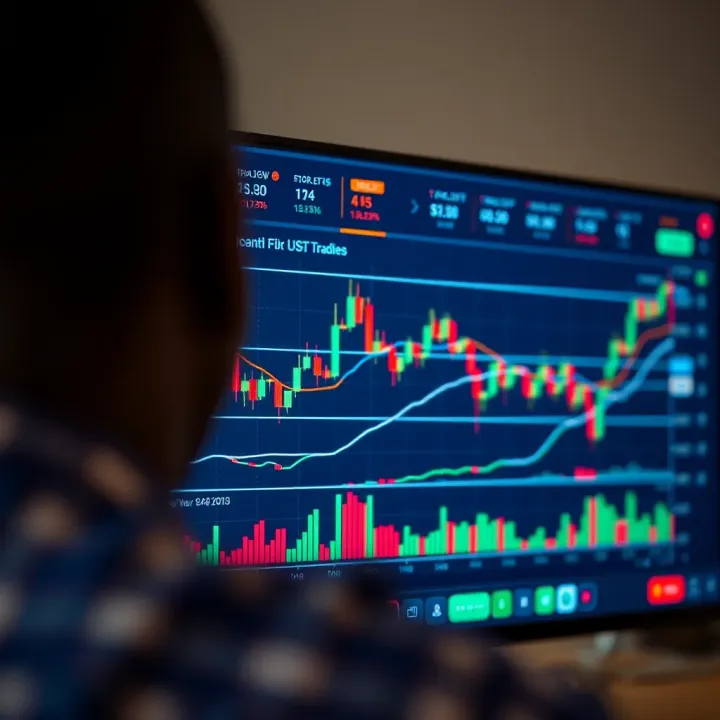
📈 Explore TradingView’s powerful charts, live data, and social tools tailored for Nigerian traders. Learn how to navigate markets effectively with this guide.
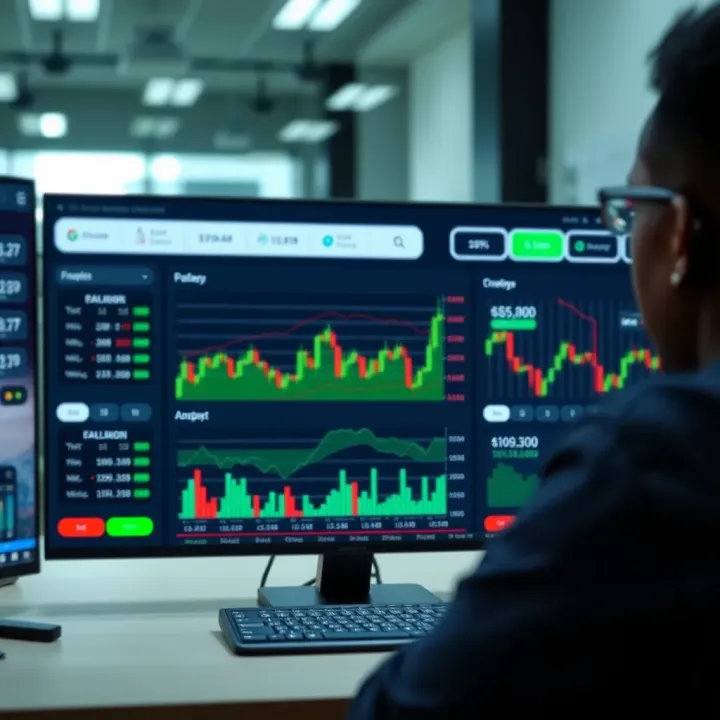
📊 Discover Pocket Option, the fast online platform for Nigerian traders 🇳🇬. Learn registration, tools, payment options & smart risk management to earn ₦ steadily.
Based on 13 reviews