

Using TradingView with Deriv: A Guide for Nigerian Traders
📈 Nigerian traders: Master TradingView on Deriv with our clear guide! Set up charts, use indicators, manage risks, and stay ahead in the market.
Edited By
Isabella Wright
Leverage plays a big role in how many traders, investors, and finance pros navigate the market. Simply put, it means borrowing money to increase your investment size or business capital. But knowing exactly how much borrowing affects your financial position can get tricky. That’s where a leverage calculator comes in handy.
A leverage calculator helps you see exact numbers on how debt impacts your assets and liabilities. It doesn’t just spit figures but breaks down the relationship between borrowed funds and your own money. For instance, if you borrow ₦500,000 to invest alongside your ₦500,000 savings, the leverage calculator shows your total exposure is ₦1,000,000, effectively doubling potential gains but also risks.

Using a leverage calculator means you don’t have to guess how much risk you’re taking or how borrowing changes your financial stance. It puts real data in your hands to guide decisions.
Whether you are an investor buying stocks, a business owner sourcing capital, or someone taking a personal loan, the calculator adapts to your scenario:
Investors use it to understand potential returns versus risks when buying shares with borrowed funds.
Businesses evaluate how much debt they can afford without jeopardising cash flow.
Individuals check how loan terms will impact repayment obligations and overall finances.
The calculator typically asks for inputs like loan amount, interest rate, asset value, and equity invested. It then shows leverage ratios, debt-to-equity metrics, and sometimes monthly repayment schedules.
All this info lets you compare borrowing options, spot over-leverage signs, or explore how different scenarios affect your financial health. It’s especially useful in Nigeria’s volatile market, where naira fluctuations and high-interest rates can quickly change lending costs.
Using the leverage calculator smartly means you weigh up rewards and risks clearly before making bold moves. Without it, you’re walking blind, especially when fuel costs from generators or sudden market shocks can drain your resources fast.
In short, a leverage calculator isn’t just a tool—it’s a financial compass helping you balance ambition with caution. As you dive deeper, you'll see how to use it for stronger financial choices in trading, business financing, and personal loans.
Leverage is a key concept in finance that helps traders, investors, and business owners boost their investment capacity or business operations beyond their existing capital. By using borrowed funds or debt, individuals and companies can amplify potential gains — but this comes with increased risk of losses. In Nigeria's ever-changing market environment, understanding leverage is crucial for making informed financial decisions, whether you're investing in shares on the NGX or planning a loan to expand your business.
Leverage involves using borrowed money to increase the scale of investment. Suppose you have ₦1 million but want to invest ₦5 million in shares. By borrowing ₦4 million, perhaps from a bank or a margin facility, you magnify your buying power. This means you control a bigger asset base than your own capital alone would allow. For Nigerian investors, this approach can mean entering deals or stock positions that would otherwise be out of reach.
While leverage has the potential to boost profits, it equally magnifies losses. Using the previous example, if your investment rises by 10%, your ₦1 million own capital could gain ₦500,000 after repaying the loan, a 50% return. On the flip side, if the investment drops 10%, the loss affects your capital far more deeply since you still owe the borrowed ₦4 million. This risk-reward tradeoff means careful calculation and risk management are crucial.
Operating leverage relates to how fixed costs in a business affect profitability. For example, a manufacturing firm in Lagos may have significant expenses in machinery and rent, which remain constant regardless of sales volume. When sales increase, profits grow faster because fixed costs are spread over more units. Nigerian businesses with high operating leverage need to maintain good sales to cover fixed costs, especially given power supply challenges that can increase operational expenses unexpectedly.
Financial leverage specifically refers to borrowing money to finance business activities or investments. For instance, a Lagos-based retailer might take a bank loan to stock up on goods from suppliers abroad. Using this borrowed capital can accelerate growth, but rising interest rates by the CBN or difficulty in generating cash flow can strain the business, especially if the naira weakens against foreign currencies.
Combined leverage is the overall impact when a business uses both operating and financial leverage. Consider a construction company in Abuja that has high fixed costs for equipment (operating leverage) and significant bank loans (financial leverage). Small changes in sales volume can cause amplified effects on net profit due to these leverages working together. In Nigeria's volatile economic climate, combined leverage requires precise management to avoid jeopardising the company's financial health.
Understanding the different types of leverage and how they apply locally helps you make smarter choices, whether you’re managing personal investments or running a business.
Leveraging can open doors but demands respect for its risks. It’s not just about how much you can borrow, but how well you plan for repayments, market swings, and operating realities in Nigeria’s economy.
Understanding how a leverage calculator works is essential for anyone looking to make smart financial decisions. This tool provides immediate clarity on how borrowing can affect your investment or business, showing both potential gains and risks. It saves you from making blind assumptions when juggling debt and equity.

This is the total value of the money you borrow to boost your investment or business capital. For example, if you take a loan of ₦5 million to expand your agribusiness, that amount becomes your debt input. Knowing this helps the calculator assess how much borrowed funds weigh compared to your own money.
The debt size influences your leverage ratio directly and determines the cost burden you will face, plus the risk of overextending yourself. A wrongly estimated loan size might trick you into thinking you can afford more than your cash flow allows.
Equity represents your own money put into the venture without borrowing. If you invest ₦2 million of your savings alongside the ₦5 million loan in the earlier example, this ₦2 million is your equity. The calculator needs this to understand how much of your own skin is in the game.
This figure helps in comparing debt to your own money, giving a snapshot of financial strength and risk tolerance. Using equity as a baseline, the calculator can highlight how pressure from debt changes your stakes.
This is the price you pay for taking on debt, expressed as a percentage. Nigerian interest rates can vary widely—from affordable rates on some bank loans to much higher rates from informal lenders. For instance, a 15% annual rate means your borrowing cost is significant over time.
Entering this figure allows the calculator to estimate borrowing costs accurately. It's vital because a low leverage ratio with a very high-interest rate can still lead to financial strain. Knowing your true borrowing cost informs decisions about loan affordability.
The leverage ratio measures debt against equity using this formula: Leverage Ratio = Debt ÷ Equity. It tells you how many times your own money is covered by borrowed funds. In the agribusiness example above, ₦5 million debt divided by ₦2 million equity gives a leverage ratio of 2.5.
This number shows how leveraged you are—a higher ratio means more borrowing and potentially more risk. It helps investors and businesses gauge how much leverage they’ve taken and whether that level fits their risk appetite.
Leverage can magnify returns if things go right. For instance, with a leverage ratio of 2.5, a 10% return on the total ₦7 million investment could translate into a roughly 25% return on your ₦2 million equity. This is because earnings come from both your equity and borrowed funds.
However, the calculator shows these amplified returns alongside the risk. It lets you compare scenarios where you invest using only your own funds or leverage to see the difference in potential profits.
While leverage can boost gains, it also increases losses. The calculator highlights this by showing how losses on the total investment impact your equity when debt must be repaid. A high leverage ratio means small market downturns can wipe out your capital quickly.
By visualising these risks, you can make more calculated decisions. For example, if your leverage ratio is above 3, the calculator might show that just a 15% drop in asset value could result in losing your entire equity, which is a red flag.
Using a leverage calculator isn’t just about chasing bigger returns. It’s about balancing opportunity with risk, and this tool gives you the numbers to decide wisely.
By understanding each input and the results, traders, investors, and business owners in Nigeria can avoid common pitfalls and use leverage as a strategic advantage rather than a financial trap.
A leverage calculator offers tangible benefits across different financial fields by helping users understand how borrowing impacts their financial standing. Whether you are trading shares, running a business, or managing personal loans, this tool helps visualise the consequences of leveraging decisions, balancing potential gains against risks.
Understanding margin trading effects
Margin trading allows investors to borrow funds to increase their share purchase capacity, amplifying both profits and losses. Using a leverage calculator, investors can simulate various leverage levels to see how much their returns or losses could shift if the market moves against them. For example, if an investor borrows ₦500,000 to buy shares and the share price dips by 10%, the leverage calculator will demonstrate how this drop impacts their total portfolio value compared with using only personal funds.
Deciding on borrowing to buy shares
Borrowing to invest in shares must be a calculated decision, especially given the volatility in the Nigerian Stock Exchange (NGX). A leverage calculator helps investors weigh the borrowing costs—like interest payments—against expected returns to know if a loan is prudent. It also illustrates how much risk is taken on, guiding investors on borrowing amounts that won’t overstretch their finances.
Planning loans for business expansion
When planning to take loans for expanding a business, a leverage calculator provides clarity on how additional debt affects the overall capital structure. For instance, a trader eyeing to open new stores in Lagos can enter proposed loan amounts and interest rates to project how this borrowing will amplify business returns if sales grow, or conversely, how repayment pressure might squeeze cash flow if sales stagnate.
Managing debt levels for sustainability
Entrepreneurs need to keep debt at manageable levels to avoid cash flow crises. A leverage calculator helps track current and future debt ratios, highlighting potential over-leverage. This insight supports decisions like restructuring debt or pausing new borrowings, ensuring businesses can sustain operations even during lean periods or market shocks.
Calculating affordability of loans
Individuals considering loans for consumption or personal projects can use a leverage calculator to assess how much borrowing they can afford. By inputting income, existing debts, and loan terms, it becomes clearer if the proposed loan will stretch finances too thin or remain affordable, helping avoid future repayment distress.
Balancing borrowing with income
A leverage calculator also assists in maintaining a healthy balance between borrowed funds and monthly income. For example, a salary earner mulling buying a tokunbo car on credit can see how the loan servicing costs compare with monthly earnings, guarding against situations where loan repayments overtake essential living expenses.
Using a leverage calculator puts financial planning on firm ground, offering concrete, data-driven insights to guide borrowing decisions across investing, business, and personal finance.
Understand margin impact on returns and losses
Plan business borrowing with clear risk-reward views
Avoid overburdening personal finances with unmanageable loans
This tool is essential for anyone serious about managing borrowing effectively in Nigeria's dynamic financial landscape.
Using leverage in financial decisions involves weighing both opportunities and risks. While leverage can boost returns, it equally amplifies losses, making it crucial to understand potential downsides before borrowing. Nigerian traders and investors, in particular, must be cautious given the local economic volatility and rising interest rates. Considering these risks helps protect capital and avoid financial strain.
Leverage magnifies downside risk by amplifying losses when investments underperform. For example, if you borrow ₦1 million to invest in shares and the stock loses 10%, your actual loss isn’t just ₦100,000 — it could be much more since you owe debt plus interest. This effect is especially risky during periods of market instability.
Market fluctuations in Nigeria have shown how sudden changes impact leveraged positions. During the 2020 oil price crash, many Nigerian businesses with high debt levels struggled as revenue dropped but loan repayments stayed fixed. Investors trading on margin also faced forced sell-offs, which deepened losses. These examples highlight why assessing leverage risk using a calculator is vital.
Rising interest rates in Nigeria add another layer of risk to leveraged borrowing. The Central Bank of Nigeria has increased rates to combat inflation, pushing loan costs higher. As a result, businesses and individuals face steeper monthly repayment amounts, squeezing cash flows.
For instance, a business taking a ₦10 million loan at 15% interest will pay significantly more than at 10%. If sales dip due to market conditions, servicing the debt becomes challenging, potentially leading to defaults. Similarly, personal borrowers may miss payments if income fluctuates, risking credit scores and access to future credit.
Signs of excessive borrowing include mounting debt relative to income or equity, difficulty meeting repayment deadlines, and relying on new loans to cover old ones. For Nigerian entrepreneurs, over-leverage often shows up as poor cash flow despite increasing sales, indicating debts weigh heavier than business earnings.
To maintain healthy leverage ratios, consider these strategies:
Set borrowing limits based on realistic income projections, not just expansion plans.
Use a leverage calculator to compare scenarios before committing to loans.
Prioritise paying down high-interest debts first.
Keep a buffer for unforeseen expenses, especially given Nigeria’s fluctuating economic environment.
Using leverage responsibly means balancing potential gains with clear-eyed awareness of financial pressures that borrowing can introduce. Proper risk assessment can protect you from getting caught in a debt trap.
By understanding these risks and making informed choices, traders, investors, and business owners can use leverage as a tool rather than a hazard, improving their chances of financial success in Nigeria’s dynamic economy.
Using a leverage calculator effectively requires more than just plugging in numbers. The accuracy of your inputs and how you interpret the results directly affect your financial decisions, especially when borrowing or investing in the Nigerian market. These tips will help you harness the tool’s full potential for smarter borrowing and investment choices.
Gathering correct financial figures is the first step. You must know exactly how much debt you plan to take and the equity you’re putting in. For example, if you’re considering a ₦5 million loan for business expansion, be sure this figure excludes hidden costs like processing fees. Equally, your own capital input should be clear, not just a rough estimate.
Being realistic about costs and income helps avoid surprises down the road. Don’t underestimate interest rates or overstate your income. In Nigeria, interest rates on loans can vary widely between banks and microfinance institutions. For instance, if a bank offers a loan at 20% annual interest but you input 15% in the calculator, the results won’t reflect the true risk or cost. This realism grounds your calculation in the local financial environment.
Comparing scenarios before borrowing allows you to see how different levels of debt affect your potential returns and risks. You might compare a scenario of borrowing ₦3 million with one of ₦5 million. The leverage calculator will show how each affects your leverage ratio and interest obligations, helping you avoid chokepoints in repayment.
Understanding the impact of leverage changes helps you recognise how small adjustments in borrowing can shift your financial position. For instance, increasing leverage slightly might improve returns but also increase risk of default during a market downturn. Being aware of these dynamics keeps you alert to the true cost of higher borrowing, especially when the naira’s exchange rate fluctuations can squeeze margins.
When to seek advice comes when leverage calculations indicate potentially risky levels or you face complex financial products. If you are unsure about the sustainability of your loan repayments or how leverage influences your investment portfolio, it's wise to talk to an expert.
Who to consult in Nigeria’s financial ecosystem includes reputable commercial banks like GTBank or Access Bank, certified financial planners, or consultants specialising in debt management. Professional bodies like the Chartered Institute of Stockbrokers or the Institute of Chartered Accountants of Nigeria (ICAN) offer members with the expertise needed. Engaging these experts helps tailor leverage decisions to Nigeria’s unique economic circumstances.
Getting the numbers and context right is key to using a leverage calculator effectively — making your borrowing and investing decisions more informed and less risky.
With these steps, you can confidently use a leverage calculator as a practical tool in your financial planning arsenal.
📈 Nigerian traders: Master TradingView on Deriv with our clear guide! Set up charts, use indicators, manage risks, and stay ahead in the market.

📈 A practical guide to setting up TradingView for Nigerian traders. Explore charting, custom indicators, alerts, and connect with tools for smarter trading.
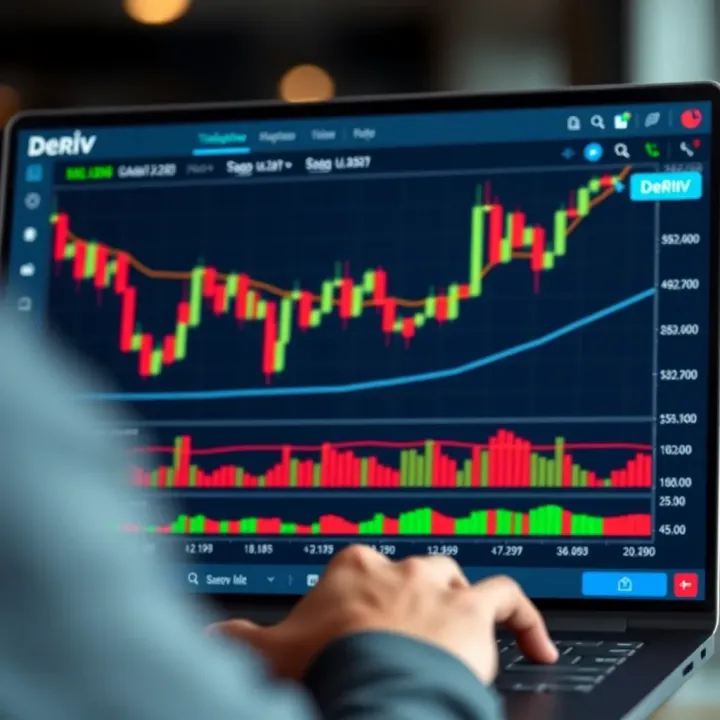
📈 Learn how to integrate TradingView charts into Deriv for real-time analysis, customize tools, and boost your trading strategy in Nigeria. 🚀

📈 Learn how to wisely pick leverage for a $10 investment! Understand risks, trade types, and smart steps to boost returns while keeping losses low in Nigeria.
Based on 12 reviews