
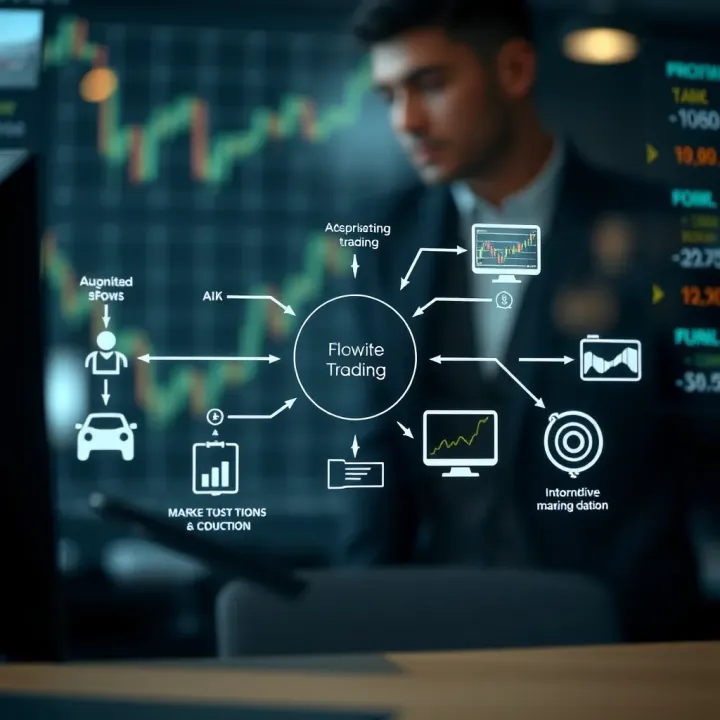
How Automated Trading Bots Work in Modern Markets
🤖 Explore how automated trading bots work, their impact on modern markets, benefits, risks, and what Nigerian traders should know before using them.
Edited By
Amelia Turner
Trading bots have become significant players in financial markets worldwide, including Nigeria's growing investment landscape. These are software programs designed to automatically execute trades based on preset algorithms and market conditions. The primary appeal of trading bots is their ability to react to market changes faster than a human ever could, eliminating emotional biases that often affect decision-making.
At their core, trading bots scan market data such as price movements, volume, and historical trends. They use this information to identify trading opportunities and act swiftly—buying or selling assets at optimal times. For example, a bot might be programmed to set a buy order for a stock if its price dips below a certain level and a sell order when it reaches a target profit margin.
There are different types of trading bots catering to various strategies. Some focus on arbitrage, seeking price differences of the same asset across exchanges. Others use technical analysis indicators like moving averages or Relative Strength Index (RSI) to signal entries and exits. More advanced bots employ machine learning to adapt to shifting market patterns, although these require more complex setup and monitoring.
For Nigerian traders, automated trading presents several advantages. The local market, often characterised by high volatility and intermittent liquidity, can benefit from bots' fast response times. Bots also enable round-the-clock trading, which is useful when dealing with international markets across time zones. However, it's essential to remember that bots are tools, not guarantees. Markets can behave unpredictably, and poorly designed algorithms might increase risk.
Successful use of trading bots depends on clear strategies, constant monitoring, and understanding both their strengths and limitations.
In the following sections, this article will explore how these tools function in more detail, the benefits and risks involved, and practical advice for Nigerian investors who want to incorporate trading bots into their portfolios. Having a solid grasp of these aspects helps ensure that you use automated trading to your advantage, not to your detriment.
Trading bots have become a vital tool for traders and investors navigating financial markets today. These automated programmes execute buying and selling orders based on predefined rules or algorithms, aiming to capitalise on market opportunities quickly and without human emotion. Understanding how trading bots work is crucial for anyone interested in using them effectively, especially within complex markets like Nigeria's where volatility and infrastructure challenges play a significant role.
At its core, a trading bot is software designed to buy and sell assets on your behalf. Instead of waiting for you to manually place trades, it continuously scans market data and acts when certain conditions are met. Imagine a trader who never sleeps, who reacts instantly to news or price changes. This is exactly what bots offer—speed and consistency. For example, a bot could be programmed to buy shares of an NSE-listed company when its price dips below a certain level and sell them once it hits a target profit.
Algorithms form the brain behind trading bots. These are sets of instructions that analyse patterns and make trading choices without requiring human input. An algorithm can be as simple as a moving average crossover strategy or as complex as deep learning models that adapt to market behaviours. For instance, a rule-based algorithm might instruct the bot to buy Bitcoin when its 50-day moving average crosses above the 200-day moving average, signalling an uptrend.
The practical benefit here is consistency; human traders can suffer from bias or emotional decisions especially during volatile periods. Bots strictly follow the algorithm, ensuring trades happen objectively and rapidly, which is quite valuable in fast-moving markets.
Trading bots need seamless communication with exchanges or broker platforms to execute orders. This integration happens using application programming interfaces (APIs), which allow the bot’s software to send commands directly to the market platforms. For Nigerian traders, platforms like Binance, Luno, or local ones such as the NGX All-Share Index trading systems offer APIs that bots can tap into.
APIs also provide account information like balances and open orders, enabling bots to manage risk and ensure they don’t exceed set limits. Without this integration, bots would be blind or unable to trade, so picking a bot compatible with your trading platform is essential.
Lastly, bots rely heavily on market data — price quotes, volume, order book depth, and sometimes external signals like news feeds or social media sentiment. This data feeds into the algorithm’s decisions to spot opportunities or risks quickly. For example, real-time updates help an arbitrage bot identify price differences between Bitcoin on Binance and another exchange and then trade to benefit from the gap.
In Nigeria, where internet stability can vary, ensuring your data feed is reliable is key. A missed or delayed price update could cause the bot to buy or sell at a disadvantageous moment. Therefore, robust data sources and signals are a backbone for accurate automated trading.
Effective trading bots combine smart algorithms, solid platform integration, and dependable market data to automate trades faster and more reliably than a human could.
In summary, grasping these basic elements helps traders navigate the trading bot ecosystem with clarity. This foundation supports making better choices about which bots suit their strategy and how to use them safely in Nigeria’s financial markets.
Trading bots come in various types, each designed to operate with specific strategies and purposes. Understanding these different bots helps traders select tools that fit their trading style and market conditions, especially within the Nigerian context where factors like volatility and market liquidity influence outcomes.
Rule-based bots follow predefined instructions set by the trader. They execute trades based on fixed criteria such as price levels, technical indicators, or time intervals. For example, a rule-based bot might be programmed to buy when the Moving Average Convergence Divergence (MACD) crosses above a signal line and sell when the opposite happens. These bots are straightforward, making them suitable for beginner traders or those who prefer a clear-cut approach without relying on complex computations.
In Nigeria, traders using platforms like Binance or Luno may benefit from rule-based bots to manage trades during volatile periods, such as the ember months when markets often fluctuate unexpectedly. The simplicity of these bots also means lower technical requirements, which is ideal given Nigeria's frequent internet and power interruptions.
Machine Learning (ML) and Artificial Intelligence (AI) bots operate by analysing vast amounts of historical and real-time data to identify patterns and make informed trading decisions. Unlike rule-based bots, these adapt to changing market environments through continuous learning. For instance, an AI bot might adjust its strategy during a bearish or bullish trend without human intervention.
Such bots require more advanced programming and computational power, often hosted on cloud servers to compensate for local infrastructure challenges. Nigerian traders with access to reliable internet and a decent budget might explore AI bots via international platforms like MetaTrader or proprietary fintech solutions.
While AI bots promise smarter, data-driven trades, they can also be vulnerable to overfitting—where the bot performs well on past market data but poorly in live markets. Continuous monitoring and periodic retraining are vital.
Arbitrage bots exploit price differences for the same asset across different exchanges. For example, if Bitcoin sells for ₦24 million on one Nigerian exchange and ₦24.3 million on another, the bot buys on the cheaper platform and sells on the pricier one to secure a risk-free profit.
These bots operate best in markets with price inefficiencies and varying liquidity, conditions common in Nigeria's cryptocurrency space. However, arbitrage bots depend heavily on fast execution and low fees to capture tiny margins successfully.
One challenge in Nigeria is the occasional delay in fund transfers between exchanges, plus transaction fees and withdrawal limits. Traders must factor these in to ensure arbitrage remains profitable.
Choosing the right trading bot means understanding its core strategy and the market realities where it will operate. Rule-based bots offer clarity and ease, AI bots promise adaptability, and arbitrage bots aim to capture quick profits from market inefficiencies.
In all cases, Nigerian traders should assess internet reliability, transaction costs, and platform support to maximise bot effectiveness.
Trading bots offer a blend of significant advantages and noteworthy limitations that any trader or investor should understand before embracing them. These automated systems excel in handling operations that require speed and consistency, yet they also carry risks that can affect trading outcomes. In a financial market like Nigeria’s, where volatility and infrastructure challenges persist, weighing these pros and cons becomes even more relevant.
One of the most compelling reasons traders use bots is their speed—bots can execute trades much faster than any human. In markets that move within milliseconds, every second counts. For example, a bot can scan multiple market data points and place a buy or sell order instantly once a specific signal like a price threshold is hit. This rapid response is invaluable in volatile sectors such as forex or cryptocurrency trading, where delays could mean missed opportunities or bigger losses.
Beyond speed, bots work tirelessly without fatigue. Unlike a human trader who may lose focus or make slower decisions after working for hours, a bot operates continuously 24/7, ensuring no potential trade signals get ignored during off-hours. For Nigerian traders who might engage in international markets across different time zones, this around-the-clock presence ensures better market coverage.
Trading often tests human emotions, especially fear and greed, which can lead to poor decisions like panic selling or overtrading. Bots, by design, stick strictly to the programmed rules and algorithms, removing emotional influence entirely. This helps maintain discipline, preventing impulsive trades that often lead to losses.
For instance, a bot following a predefined stop-loss strategy will exit a position without hesitation, even if the trader feels tempted to hold on hoping for a rebound. This removes the “gut feeling” out of the equation, which often complicates consistent profits.
Technical glitches or connectivity issues can disrupt bot operations. Imagine a bot getting disconnected from the market data feed or the trading platform midway through a session; it might miss vital signals or execute trades based on outdated information. In the Nigerian context, where internet instability and power outages happen severally, this risk grows bigger. A bot could lose out on a crucial trade or, worse, hold a losing position longer than intended because of delayed disconnection.
Overfitting refers to when a bot’s algorithm fits too closely to past market data, performing excellently in backtesting but failing in live markets. Financial markets are dynamic, affected by news, economic policies, and unexpected events. A bot tuned solely to previous data patterns might struggle to adapt when market conditions shift.
For Nigerian traders, this means relying purely on historical data from local or international markets without considering recent regulatory changes or economic shocks could lead to disappointing results. Periodic adjustment of bot parameters is therefore necessary to keep up with evolving market trends.
Security is a critical issue in automated trading. Bots require access to trading accounts, sometimes even handling deposits and withdrawals automatically. If compromised by hackers, they can cause significant financial loss. Nigerian traders must be cautious, especially with bot providers lacking strong security measures or transparency.
Moreover, phishing scams and fake bot services have become common. Traders need to verify the legitimacy of any bot software, use strong authentication methods like two-factor authentication (2FA), and avoid sharing sensitive information recklessly. Protecting your account details and API keys is vital to secure automated trading setups.
While trading bots offer powerful tools to enhance market participation, understanding their speed, emotional neutrality, and technical vulnerabilities helps traders make smarter, customised choices suitable to their needs and the Nigerian market environment.
In summary, trading bots can improve efficiency and reduce emotional errors but require ongoing oversight and strong caution around technical and security issues. Nigerian traders should balance these advantages and risks to achieve sustainable results.
Trading bots have grown in relevance in Nigeria’s financial markets as they offer automation that can handle the speed and complexity of modern trading. For Nigerian traders and investors, these automated tools can help manage multiple asset classes on local and international exchanges, optimising entry and exit points with less emotion than manual trading. However, understanding the local environment remains critical because market infrastructure and regulatory nuances affect bot effectiveness.
Nigerian traders now access several international platforms that support bot integration, such as Binance, Kraken, and Huobi. These platforms offer APIs that enable seamless bot operations, including executing trades automatically based on programmed strategies. On the local front, platforms like NGX (Nigerian Exchange Group) are beginning to explore automation but currently have limited bot support. This creates an opportunity for bots to thrive mainly on international exchanges, where liquidity and a broad range of assets are available.
Bot usage on global platforms also allows diversification beyond naira-denominated assets, giving Nigerian traders access to cryptocurrencies, foreign stocks, and commodities. Still, traders need to consider compliance requirements when transacting across borders to avoid pitfalls.
A critical factor for bot adoption in Nigeria is the ability to move funds smoothly between bank accounts, wallets, and exchanges. Payment platforms such as Paystack, Flutterwave, and OPay facilitate easy transfers, allowing bots to fund accounts or withdraw proceeds efficiently. Integration with Nigeria’s banking system—leveraging Naira online transfers, USSD codes, and mobile wallets—simplifies user experience and reduces delays.
For instance, a bot configured to trade cryptocurrencies can quickly convert profits into naira via local exchanges and send money to a user’s GTBank or Zenith Bank account, all with minimal manual input. This integration cuts down on cash-out friction, especially important during ember months or times of market volatility when liquidity needs can shift rapidly.
Stable internet and reliable power remain obstacles for many Nigerian traders relying on trading bots. Bots depend on continuous data feeds and connection to external servers to function correctly. Interruptions caused by power outages or poor network coverage can result in missed trades, delayed order execution, or exposure to unwanted risk.
Traders often invest in alternatives such as solar-powered setups, mobile data backups, and Uninterruptible Power Supplies (UPS) to mitigate these disruptions. However, these solutions can increase operational costs, which must be factored when evaluating the profitability of bot strategies.
Nigeria’s foreign exchange (FX) market and local equities can experience sudden price swings influenced by policy changes, macroeconomic factors, or speculative activity. While volatility can create profitable trading opportunities for bots, it also means strategies must be adaptive and constantly updated.
For example, a bot optimised for a bullish market could suffer losses if the Central Bank of Nigeria (CBN) announces unexpected currency controls or FX rate adjustments. Hence, local traders need bots with flexible algorithms or manual override capabilities to respond swiftly to such market dynamics. Regular monitoring remains essential, even with automation in place.
Nigerian traders looking to use trading bots must balance the technical benefits with practical realities like infrastructure and market behaviour. Successful application demands careful platform selection, integration, and contingency planning.
Overall, trading bots provide a valuable tool for Nigerian traders aiming to increase efficiency and execution speed. But context-specific challenges must be managed deliberately to harness their full potential in a unique market environment.
Regulating the use of trading bots and addressing ethical questions are essential for maintaining market integrity and protecting investors. Without clear guidelines, automation tools could be misused, leading to unfair advantages or market disruptions. In Nigeria, as the adoption of trading bots grows, understanding the legal framework and ethical implications helps traders navigate risks while promoting transparent and fair markets.
The Nigerian Securities and Exchange Commission (SEC) monitors activities in the capital market, including automated trading practices. Currently, SEC Nigeria has begun to acknowledge the rise of algorithmic trading and the unique challenges it poses, but comprehensive regulations specific to trading bots remain in development. Traders using bots on local platforms like the Nigerian Stock Exchange (NGX) or on international exchanges integrated with Nigerian payment systems should ensure compliance with existing trading rules.
For instance, the SEC mandates disclosures to prevent market manipulation and insider trading, which apply equally to bot-assisted transactions. Failure to adhere to these can lead to penalties or blacklisting. Additionally, bots must not exceed prescribed order limits or engage in practices such as layering or spoofing, which involve entering misleading orders to manipulate prices.
Traders should regularly review updates from SEC Nigeria and NGX to ensure their trading bots operate within legal boundaries and avoid unintended breaches.
Automated trading bots raise ethical concerns about fairness and equal access to market opportunities. Bots equipped with advanced algorithms and fast data feeds may outpace manual traders, potentially skewing market dynamics. This can be likened to having a tokunbo car on the expressway while others are on foot — speed and efficiency create an uneven playing field.
There is also the issue of transparency. Traders need to understand how bots make decisions, especially when proprietary algorithms are involved. Lack of clarity might lead to unintentional market manipulation or exploit vulnerable market conditions.
Moreover, ethical use demands that bots do not contribute to excessive volatility or destabilise markets by triggering rapid-fire trades during sensitive periods, such as ember months or around major economic reports.
To promote fair markets, consider the following points:
Ensure algorithms are tested to avoid erratic behaviours during unusual market conditions.
Avoid strategies that exploit loopholes or create false impressions of demand.
Stay informed about market ethics codes from bodies like the SEC and NSE.
In the Nigerian context, where many retail investors may still depend heavily on manual trading, institutional access to sophisticated bots calls for balanced regulation and corporate responsibility. By respecting legal prescriptions and ethical standards, traders can use bots not just for personal gain but as tools that support market stability and fairness.
Choosing the right trading bot is critical for success in financial markets, especially when automation can accelerate both profits and losses. Nigerian traders should focus on bots with proven track records, transparency in strategy, and adaptability to local market quirks such as currency volatility and power instability.
Performance evaluation starts with checking historical data — reliable bots provide backtested results over different market conditions. For example, a bot that thrived during a bullish run may struggle in sideways markets, so consider performance consistency. User reviews and third-party audits add layers of trustworthiness; platforms like Binance and Luno often list bots with user ratings.
Reliability also comes down to uptime and support. Power and internet outages are common challenges in Nigeria, so opt for cloud-based bots or services with fail-safe mechanisms during disruptions. Selecting bots compatible with your preferred trading platform and payment methods (such as integration with GTBank’s USSD or Flutterwave) eases operational hurdles.
Automating trades doesn’t mean you should leave risk unchecked. Start with small capital allocation and avoid setting overly aggressive parameters. For instance, limit daily trade volumes or maximum losses to prevent large unexpected dips due to sudden market swings.
Diversify your bot strategies across different asset classes where possible—combining a trend-following bot with an arbitrage bot can balance risk and reward. Regular monitoring is crucial; don’t just trust the bot blindly. Set alerts for abnormal activities or unexpected performance dips.
Finally, keep software and security protocols up to date. Phishing and hacking attempts targeting bot APIs are increasingly common, so use strong authentication and change access credentials severally. Treat bot usage as part of your broader portfolio risk management, not a shortcut to quick profits.
Successful trading with bots depends not only on technology but smart choices and disciplined control. Investing time in vetting bots and setting clear boundaries protects your capital and improves long-term outcomes.
In essence, wise selection and proper risk control ensure that Nigerian traders benefit from trading bots instead of getting caught by surprise. Quality beats quantity — better one reliable bot than many flawed ones. With these points, you can approach automated trading with greater confidence and resilience.
🤖 Explore how automated trading bots work, their impact on modern markets, benefits, risks, and what Nigerian traders should know before using them.

📈 Learn the role of brokers in Nigerian financial markets, their fees, types, and how to pick a trustworthy broker. Avoid common pitfalls and invest smartly in ₦! 🇳🇬
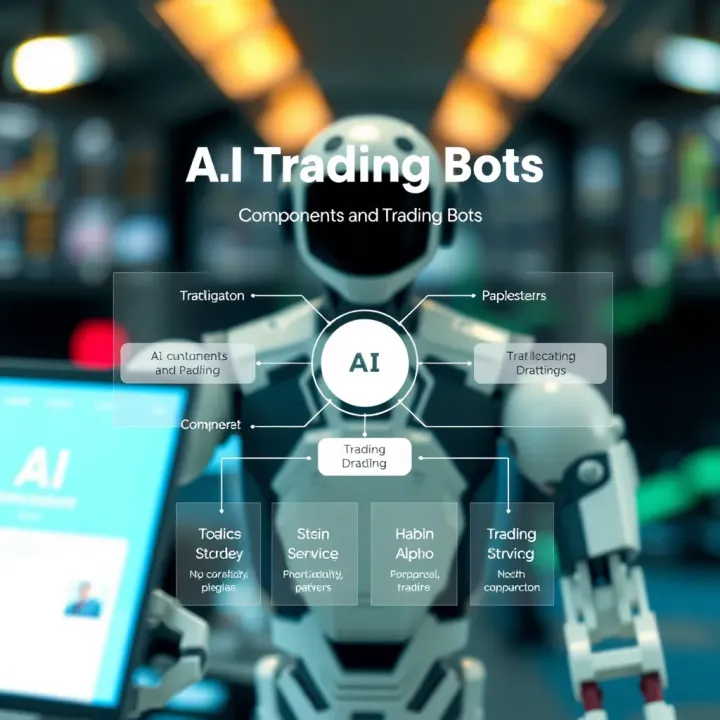
🤖 Explore how AI trading bots function in Nigeria's markets, their tech, pros, cons, rules, and tips for smart automated trading decisions.
Discover KwakoL Broker's role in Nigeria's financial markets 📈, its services, regulatory status, and key insights to help ₦-investors make smart brokerage choices.
Based on 13 reviews