
Understanding Binary Charts for Clear Data Visualization
📊 Explore how binary charts visualize digital data clearly! Learn their use in computing & digital fields for better understanding of binary systems.
Edited By
Charlotte Evans
Derivative charts provide crucial insight into how changes in one variable affect another, particularly in finance and mathematics. In simple terms, they visualise the rate at which things move — like how fast a stock price climbs or falls over time. For traders and investors, understanding these charts can make the difference between spotting a profitable trend and missing it altogether.
Think of a derivative chart as a speedometer for prices or functions. Just as you wouldn’t drive blind without knowing your speed, you shouldn’t trade without knowing how quickly market prices are changing. These charts often plot the first derivative, which signals the velocity of a price shift, helping you decide when to buy, hold, or sell.
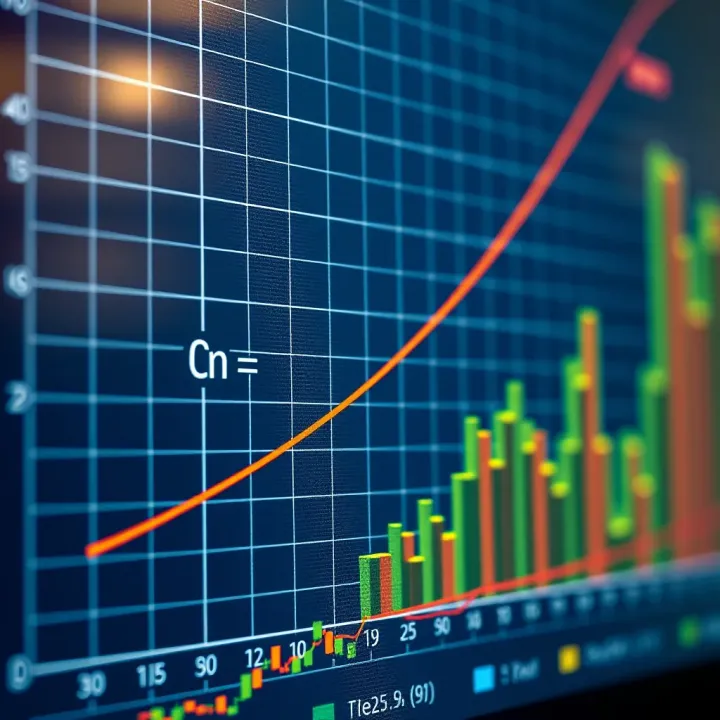
Unlike regular price charts that display the actual value — say the price of a stock — derivative charts focus on the rate of change. This tells you whether the price gains momentum or slows down, which is vital for timing your moves in the stock market or understanding function behaviour in mathematical models.
For example, if a stock’s price accelerates from ₦100 to ₦120 within a few days, the derivative chart reflects this by showing a positive steep slope. If the momentum drops and the stock stabilises, the slope levels out near zero. Negative slopes hint the stock price is dropping, signalling caution.
Timing Entry and Exit Points: Derivative charts help you catch the early signs of trend reversals before they appear prominently on price charts.
Risk Management: They alert you to rapid price swings that might expose you to higher risk or potential losses.
Confirmation of Trends: When the derivative’s direction matches price movement, it confirms the strength of the trend.
An accurate read of derivative charts can empower traders to anticipate shifts rather than react to them, cutting losses and maximising profit.
In finance especially, understanding these charts complements technical analysis. They pair well with tools like moving averages and RSI, but give an immediate snapshot of how fast prices evolve, which traditional charts alone might not reveal clearly.
This section sets the stage for how derivative charts work and why you should care about the speed of price changes, not just their levels. The following parts will unpack how to read these charts effectively, common misinterpretations, and best practices for using them in Nigerian markets and beyond.
Derivative charts are vital tools for understanding how a value changes over time or across different conditions, especially in finance and mathematics. These charts show the rate of change of a function or asset price rather than just the value itself. For traders and investors, this means gaining insight into momentum, potential reversals, and trends beyond what ordinary price charts reveal. For example, if a stock price graph shows a steady rise, its derivative chart reveals whether that rise is speeding up or slowing down, helping you time your entry or exit more precisely.
A derivative chart represents the first derivative of a function graphed over a certain interval. In simpler terms, it measures how fast something is changing at any given point. Imagine you’re driving a car: the speedometer shows how fast you’re moving (derivative), while the odometer shows how far you’ve gone (function). Similarly, a derivative chart plots the "speed" of changes in values, like the rate at which stock prices increase or decrease. This quantitative insight helps professionals spot acceleration or deceleration in market movements, which is crucial in decision-making.
Derivative charts are not just limited to financial markets. Engineers, scientists, and economists also use them to analyse system behaviour—such as how temperature rises or falls over time or how production rates alter with changes in input parameters.
While a function graph directly shows the value of a variable (e.g., stock price, temperature) against time or another independent variable, a derivative chart reveals the rate at which this value changes. This distinction is key. For instance, a stock price might hover around ₦500 for several days (flat function graph), but its derivative chart could show positive spikes signalling an impending price move.
Here are some practical contrasts:
Function Graph: Displays actual prices or values.
Derivative Chart: Displays how quickly those prices or values change, indicating momentum.
A rising function graph with a derivative value near zero suggests slow, steady gains; a sharply rising derivative value means rapid acceleration.
Understanding the difference helps you avoid missing subtle signals that a normal price graph alone won't show. Traders leveraging derivative charts often spot trend shifts earlier, giving them a competitive edge.
In sum, derivative charts go beyond showing what the numbers are—they explain how the numbers are moving and how fast they're moving. For anyone involved in finance or data-driven analysis, recognising this can significantly refine your strategy and timing.
Constructing a derivative chart is a vital step for traders, analysts, and finance professionals who want to understand how a function’s rate of change behaves over time. These charts reveal the slope or speed at which prices or mathematical functions evolve, offering sharper insights than raw data alone. Whether you are handling market trends or mathematical models, knowing how to build a derivative chart accurately helps in making precise predictions and smarter decisions.
Analytical methods involve calculating the derivative of a function using calculus principles, before plotting it manually or through software. This begins with knowing the original function, which could represent price movements of a stock or a mathematical expression. For example, if the value of a stock over time is given by (f(t) = 5t^2 + 3t + 7), its derivative (f'(t) = 10t + 3) tells you the instantaneous rate at which the price changes.
Once the derivative function is established, select points along the time axis and compute their corresponding derivative values. Plotting these points against time yields the derivative chart. This method is highly precise but requires solid calculus knowledge and careful calculations. It is often used in academic settings or when exact models are needed, such as forecasting sales growth based on established formulas.

Most finance professionals today prefer digital plotting for speed and accuracy. Software platforms like Excel, MATLAB, Python libraries (Matplotlib, NumPy), or specialised trading tools provide functions to calculate and draw derivatives directly from data sets.
For instance, in Excel, you can use numerical differentiation techniques such as the finite difference method to approximate derivatives based on historical price data. This involves calculating the change in price divided by the change in time between data points. Then, you can visualise the derived values through line graphs, making it easier to spot trends or turning points.
Digital plotting is particularly useful when working with noisy or real-time data common in the Nigerian stock market or forex trading. It saves time and reduces human error, allowing analysts to focus more on interpreting results than on tedious calculations.
Derivative charts constructed accurately—either analytically or digitally—serve as powerful tools to measure speed and direction of changes, enabling sharper market entries and exits.
In practice, combining these methods helps. For example, an analyst might use analytical derivatives for theoretical modelling and validate assumptions with digital plots from real data. This dual approach strengthens analysis, especially when adapting strategies in volatile markets like Nigeria’s.
By mastering both ways of constructing derivative charts, traders and analysts position themselves for deeper insight and better timing in decision-making.
Understanding how to interpret derivative charts is a skill every trader and analyst should master. These charts reveal the rate of change in prices or functions, providing insight beyond mere value levels. Rather than just seeing if a stock has risen or fallen, a derivative chart shows you how fast that movement happened and whether the trend is gaining or losing momentum.
Proper interpretation helps identify inflection points—moments when the trend may reverse or accelerate—which can prove decisive for entering or exiting trades. For instance, if the first derivative of a price chart suddenly shifts from positive to negative, that signals a potential peak and a good moment to consider selling.
One of the main benefits of derivative charts is seeing the slope of the original function at each point. The slope indicates whether the value is increasing or decreasing and how steeply. For traders, a steep positive slope means rapid price increases, while a steep negative slope shows sharp declines.
Critical points occur where the slope equals zero. These points mark local maxima, minima, or inflection spots on the original chart. Spotting these on the derivative chart means you can anticipate turning points in price movements. For example, if the derivative’s value touches zero and begins to move downward, the underlying price may have peaked and could start to fall.
Recognising where the slope flattens out provides a heads-up before price reversals, helping you decide timely trades.
Beyond direction, understanding the rate at which prices change is vital. The derivative chart makes it easy to spot accelerating or decelerating trends. When the derivative curve rises, the price increase is accelerating; when it falls, the momentum slows.
For example, during a bullish rally, a rising first derivative suggests growing investor confidence and momentum. Conversely, a falling derivative while prices continue to rise hints the rally is tiring—perhaps a signal to prepare for a reversal.
In quantitative finance, recognising these changes supports refined strategies such as momentum trading or risk management. In practical terms, combining price charts with their derivatives will give you a fuller picture, helping to avoid late entries or exits.
Interpreting derivative charts demands attention to detail but rewards with sharper decision-making. Traders using this tool in combination with volume data or technical indicators tend to spot opportunities earlier and navigate market swings more efficiently.
Derivative charts serve as valuable tools across several fields, helping professionals assess the rate at which variables change. This section breaks down their practical uses in finance and engineering, illustrating how they offer critical insight when interpreting complex data.
In financial markets, derivative charts provide traders and analysts with a real-time glimpse into the momentum behind price movements. For example, tracking the rate of change in a stock’s price can help identify the strength of an uptrend or downtrend before traditional price charts show clear signs. This is essential in volatile markets where early signals can mean either capturing profits or avoiding losses.
Derivative charts also play a key role in spotting turning points, like potential reversals or breakouts. Consider a situation where the price of an asset is rising, but its derivative chart (showing the rate of price change) starts to flatten or decline. This divergence often warns that the upward momentum may be weakening, signalling traders to adjust their positions accordingly.
Moreover, derivatives help measure volatility dynamics, which feeds into risk management strategies. For example, derivatives of option prices can inform the implied volatility trends used by market makers and derivatives traders to price contracts and hedge positions.
In engineering, derivative charts offer insights into how physical quantities evolve. Mechanical engineers, for example, analyse the rate of stress or strain change over time on materials to anticipate failure or fatigue. When a structure like a bridge undergoes repeated loads, watching these rates helps engineers schedule maintenance before damages become critical.
In the physical sciences, derivative charts assist in understanding phenomena such as velocity and acceleration in motion. For instance, physicists use derivative graphs to monitor the acceleration of a moving object based on position data. The first derivative gives velocity, while the second derivative provides acceleration, enabling clear detection of changes in movement patterns.
Engineers also apply these charts in process control, monitoring variables like temperature or pressure rates in chemical reactors. Sudden spikes or drops in these rates can indicate system instability. Early detection allows timely intervention, preventing accidents or production losses.
Derivative charts transform raw data into actionable information by revealing how quickly things change. Whether in financial markets or engineering systems, this insight often spells the difference between success and failure.
Practical use of derivative charts requires understanding the context and quality of data. Noise and data fluctuations can mislead if not interpreted carefully. Thus, professionals often combine derivative charts with other tools and indicators to build a comprehensive view. This approach ensures better decision-making backed by solid quantitative evidence.
Derivative charts are powerful tools for tracking rates of change, but traders and analysts often face hurdles that can cloud their insights. Understanding these challenges helps avoid costly mistakes and sharpens decision-making.
A major challenge is misreading what derivative charts signify about market trends. The derivative shows velocity, that is, how fast prices or functions are changing—not the price level itself. For instance, a steep slope upward might suggest accelerating gains, but this doesn’t guarantee sustained upward movement. Traders who confuse this can make premature buy or sell decisions.
Another common slip is ignoring the context of critical points. A zero derivative point might signal a peak, trough, or inflection point, but without further analysis, it’s risky to predict the market direction solely from the derivative. An example is when the price of a stock flattens but the derivative remains volatile; jumping into positions based on such signals only invites losses.
To manage this challenge, combine derivative insights with other indicators—volume, support and resistance zones, or fundamental data—to confirm or question the trends the derivative chart shows.
In real markets, data rarely comes clean. Noise—random fluctuations with no clear pattern—can distort derivative charts, especially where high-frequency price changes occur. Such noise makes calculated slopes jagged, leading to false positives or misleading signals.
For example, during an ember months’ trading session, increased volatility might produce spikes on a derivative chart that don’t reflect genuine trend shifts but market jitters or reaction to unrelated news. If a trader acts on every sharp derivative move without filtering, they risk entering or exiting trades too often.
Smoothing techniques like moving averages, or using software that averages out short-term variations, can help reduce noise. However, the choice of smoothing window size requires balance: too short, and it fails to reduce noise; too long, and it lags behind true market movements.
When using derivative charts, it’s vital to interpret trends within a broader analysis framework and clean noisy data for reliable insights.
Addressing these common challenges lets you navigate derivative charts more efficiently, turning them from confusing graphs into dependable tools for smarter investing and trading decisions.
Accurate reading of derivative charts can make a big difference in decision-making, especially for traders, investors, and finance professionals. These charts reveal the speed and direction of change, not just the value itself. If you misread the signals, you risk acting too late or wrongly interpreting market trends. Therefore, applying practical tips ensures you get the clearest picture and avoid costly mistakes.
Start by confirming the reliability of your data sources. Derivative charts depend heavily on accurate input values, whether they represent stock prices, interest rates, or economic indicators. For example, relying on a fintech app that updates stock prices every minute is better than using monthly snapshots, as it captures short-term fluctuations more precisely.
Poor-quality charts, perhaps due to outdated software or wrong settings, can distort the derivative lines. Make sure the platform you use has proper calibration and refreshes data consistently. For instance, if you are tracking currency price derivatives on a platform, verify that their time intervals align with your trading strategy. Missing this step is like driving with a faulty speedometer—it leads you off course.
While derivative charts yield vital information on how fast indicators change, they work best alongside other tools. For example, pairing a derivative chart showing accelerating price falls with volume analysis can reveal if the drop reflects genuine selling pressure or just a market glitch.
Consider integrating moving averages or RSI (Relative Strength Index) to provide context. These indicators help confirm trends or warn against false signals. For instance, a derivative might show a positive slope, indicating growth rate increasing, but if RSI signals overbought conditions, it suggests caution.
Traders in Nigeria often use derivative charts with patterns recognised in our local markets, such as the impact of import restrictions or forex scarcity on price volatility. Combining derivative analysis with on-the-ground news or macroeconomic reports enriches your understanding and leads to more confident trades.
Always remember, derivative charts are tools, not crystal balls. Effective use comes from blending them with sound data and broader analysis strategies.
By verifying data accuracy and pairing derivative charts with complementary tools, you improve your ability to read price movements and react promptly. These tips sharpen your technical insights and help you navigate the complex Nigerian financial environment more successfully.
📊 Explore how binary charts visualize digital data clearly! Learn their use in computing & digital fields for better understanding of binary systems.
📊 Discover what margin means in business and investing, learn types, risks, benefits, and tips to manage margin effectively in Nigeria's financial scene.
Explore synthetic trading concepts, practical examples, benefits, risks, and regulations to better navigate Nigeria’s financial markets 📈💼

Explore binary trade in Nigeria 📊: Learn how it works, discover key strategies, understand risks & benefits, plus vital Nigerian regulations to trade smartly.
Based on 11 reviews