
Top Forex Traders in Nigeria: Insights and Tips
🔍 Explore top Nigerian forex traders, their winning strategies, local market insights, and expert tips to boost your trading success in Nigeria's forex scene.
Edited By
Oliver Davies
Nigeria’s crypto landscape boasts a vibrant group of traders who have amassed significant wealth through savvy strategies and a deep understanding of both the local and global markets. These traders operate in a complex environment shaped by fluctuating naira exchange rates, regulatory uncertainty from authorities like the Central Bank of Nigeria (CBN), and infrastructural challenges such as inconsistent power supply and limited access to banking services.
At the heart of Nigeria’s top crypto traders are individuals with diverse backgrounds—from tech entrepreneurs and fintech developers to young professionals leveraging peer-to-peer (P2P) platforms. Rather than relying solely on conventional exchanges, many have found success by mastering P2P trading, arbitrage between global and local prices, and timely exploitation of price swings caused by naira volatility.

Here are some key characteristics and methods these profitable traders tend to exhibit:
Adaptability: They adjust quickly to shifting regulations and market conditions. For example, after the 2021 CBN directive restricting banks from facilitating crypto transactions, traders shifted heavily to P2P markets and alternative payment methods like USSD codes through fintech platforms such as OPay and PalmPay.
Research-driven decisions: Instead of jumping at hype, they rely on historical trends, on-chain data, and credible sources to time their trades effectively.
Risk management: Nigerian crypto traders often diversify into stablecoins (like USDT) to hedge against naira devaluation and keep capital safe during market dips.
Community engagement: They actively participate in online forums and Telegram groups to share market insights and spot emerging tokens early.
Many of Nigeria’s richest crypto traders began with modest sums, gradually employing skills and local knowledge to turn ₦hundreds of thousands into billions.
Understanding how these traders navigate Nigeria’s unique market challenges offers insightful lessons for both new and seasoned investors hoping to capitalise on Africa’s rapidly growing crypto economy.
Understanding the backgrounds and accomplishments of Nigeria’s top crypto traders offers valuable insights into how they carved out substantial wealth in a challenging environment. Profiling these key players reveals not only their strategies but also how they adapt to Nigeria’s volatile financial landscape and regulatory pressures. For traders and investors, this knowledge clarifies which approaches work and which pitfalls to avoid.
Many successful individual traders in Nigeria began their crypto journey through informal networks or by responding to economic pressures such as naira depreciation and limited access to traditional banking. For instance, some early adopters were tech-savvy youths who learned about Bitcoin and Ethereum through online communities and quickly saw potential profit in trading. Others transitioned from sectors like forex trading or stockbroking, leveraging their existing financial knowledge.
These traders often started with small capital—sometimes as low as ₦50,000—gradually increasing their holdings by reinvesting profits. Their backgrounds typically combine a mix of entrepreneurship, financial literacy, and a willingness to tolerate risks that traditional investors might avoid. This diversity highlights how varied entry points can lead to success, encouraging others with different experiences to participate.
Some individual traders have reportedly amassed net worths running into billions of naira, though exact figures remain private due to the pseudonymous nature of cryptocurrency. Nigeria’s top solo traders often boast returns exceeding 100% in certain market cycles, a feat achieved through tactical timing and risk management.
For example, a Lagos-based trader who started in 2017 reportedly converted small trades into significant capital by focusing on altcoin volatility during bear markets. Their success stories serve as proof that disciplined trading combined with market knowledge can yield substantial wealth, despite regulatory hurdles and market fluctuations.
Several Nigerian entrepreneurs have built legitimate crypto exchanges like BuyCoins, Quidax, and Patricia. These platforms bridge the gap between fiat naira and cryptocurrencies by offering localised payment options such as bank transfers and USSD codes. Founders often come from fintech or software development backgrounds and possess strong networks within Nigeria’s digital security and finance sectors.
These platforms catalyse wider crypto adoption by simplifying access and providing liquidity for traders. Their founders are frequently viewed as pioneers who have enabled many Nigerians, including those outside Lagos or Abuja, to explore crypto trading securely and conveniently.
Exchange operators generate revenue through transaction fees, spreads on trades, and premium services such as instant withdrawals or escrow facilitation. For example, charging even a small fee—say 0.5% per transaction—across thousands of daily trades easily scales into millions of naira monthly.
Moreover, successful exchanges often diversify into crypto-related services like educational content, wallet integrations, and merchant payment solutions. These expansions enhance user retention and create multiple income streams, helping operators build extensive and resilient wealth in Nigeria’s dynamic crypto space.
Profiling Nigeria’s leading crypto traders, both individuals and entrepreneurs, offers practical lessons on how to navigate this market for profit. Their experiences illustrate real strategies and adaptations that any aspiring trader or fintech innovator can study and emulate.
In Nigeria’s volatile financial environment, having an effective trading strategy is not just helpful—it is essential for success. Top crypto traders here tailor their methods to fit unique market conditions such as currency instability, shifting regulations, and limited formal banking access. Understanding these strategies provides insight into how some Nigerians have turned modest investments into substantial wealth.
Day trading involves buying and selling cryptocurrencies within short periods, often within a single day, to profit from rapid price fluctuations. Scalping, a more intense subset, focuses on capturing small gains multiple times throughout the day. For Nigerian traders, these techniques offer quick turnaround on investments especially when the naira fluctuates sharply. Traders might buy Bitcoin early morning when the naira weakens, then sell after a few hours once demand spikes slightly due to market news or local events.
These strategies require constant attention and reliable internet, but they can be quite profitable for traders with a sharp eye on charts and market sentiment. It's common to see day traders using mobile trading apps provided by platforms like Binance and Luno, adjusting their positions as news about the Central Bank of Nigeria’s policies or global crypto moves hit the market.
Swing traders hold assets over days or weeks, capitalising on predictable uptrends or downtrends. Unlike day trading, swing trading allows more time for analysis and less reaction to minute-by-minute changes. Holding, or "HODLing," is a longer-term approach where traders keep onto cryptocurrencies despite short-term volatility, anticipating price appreciation over months or years.
In Nigeria, where inflation erodes savings quickly, holding crypto like Bitcoin or Ethereum can hedge against naira depreciation. For example, some investors bought Bitcoin at ₦1.5 million per BTC in 2020 and held it through to 2021, seeing it rise beyond ₦20 million at peaks. Swing traders also take advantage of local market patterns, such as increased trading activity during embers months or festive seasons when remittances and spending surge.
The naira’s frequent swings and persistent inflation present major challenges for crypto traders. Nigerian traders often use crypto as a shield, moving funds into digital assets when local currency weakens. This requires timing and awareness of both local economic indicators and global crypto trends.
Traders also adjust their buying power by converting naira to stablecoins like USDT during periods of uncertainty. This helps preserve value without exiting the crypto market entirely. For instance, during periods of sharp naira devaluation, some traders swiftly switch to stablecoins to avoid losses, then convert back when conditions stabilise.
Formal banking restrictions and occasional limited access to foreign exchange mean many Nigerian traders rely on peer-to-peer (P2P) platforms to buy and sell cryptocurrencies. Services like Binance P2P and Paxful allow users to transact directly, often at better rates and with more flexibility than formal exchanges.
USSD codes have also become handy tools. Traders without constant internet access use USSD services provided by fintech firms and some crypto platforms to check balances, trade, or fund wallets. This approach bridges the gap for those outside major cities or without smartphones, expanding access to crypto trading beyond the usual urban centres.
Nigeria’s crypto traders succeed by blending global market techniques with local financial realities, showing that understanding the environment is as important as mastering trading itself.
Crypto trading in Nigeria offers huge rewards but comes with serious hurdles. Understanding these challenges helps traders navigate risks and keep their investments safe. From tough regulations to scams, the obstacles are real and can wipe out gains quickly if ignored.
The Central Bank of Nigeria (CBN) has taken a firm stance against cryptocurrency since early 2021. The CBN circular banned banks and financial institutions from facilitating crypto transactions or providing services to crypto exchanges. This makes it difficult for traders to use local bank accounts for deposits or withdrawals linked to cryptocurrency trading. Consequently, many traders rely heavily on peer-to-peer (P2P) platforms to convert naira to crypto and back.
This banking restriction creates cash flow challenges and limits liquidity for traders. For example, a trader wanting to cash out sizeable crypto profits must juggle multiple P2P deals, which can be time-consuming and riskier than direct bank transfers. Also, not having direct banking access complicates paying for expenses or transferring profits into mainstream investments.
The unclear and shifting regulatory environment adds to traders’ difficulties. Without clear rules from regulators, traders remain uncertain about the legality and safety of their activities. This uncertainty can cause sudden market shocks when rumours or announcements about potential bans or restrictions spread.
Moreover, some traders find it hard to secure formal financial services such as loans or investment products that involve crypto holdings. Institutions typically avoid exposure to crypto-related business because of the regulatory grey area. This environment forces many traders underground, relying on informal networks that lack consumer protection and increase exposure to fraud.
Security is a top concern for Nigerian crypto traders. Accounts and wallets are prime targets for hackers and fraudsters due to often lax security measures or user negligence. Traders must use strong passwords, multi-factor authentication (MFA), and hardware wallets where possible to secure their crypto assets.
Many experienced traders also segregate funds: keeping only operational capital in online wallets while storing the bulk of their holdings in cold wallets offline. This approach limits losses from potential breaches. Still, securing crypto in a country with frequent power outages and unstable internet connectivity makes accessing wallets at critical moments a challenge.
A variety of scams target Nigerian crypto traders, preying on their ambition and sometimes lack of technical knowledge. Common schemes include Ponzi setups disguised as investment platforms promising unrealistic returns, fake Initial Coin Offerings (ICOs), and phishing attacks tricking traders into revealing private keys or seed phrases.
For instance, several fake crypto investment apps have surfaced during ember months, targeting traders eager to multiply their savings before festive seasons like Sallah or Christmas. These scams often vanish once they have taken enough money, leaving victims without recourse.
Nigerian crypto traders must stay vigilant, regularly update their security practices, and verify every opportunity carefully before committing funds. Educating oneself about typical scams and staying informed about regulatory changes can save ₦millions and preserve financial well-being.
By understanding these regulatory and security challenges, traders can better prepare and safeguard their ventures in Nigeria’s unique crypto ecosystem.
Cryptocurrency trading has emerged as a significant force shaping Nigeria’s economic landscape. Its influence goes beyond individual wealth accumulation, extending into broader societal changes that affect millions of Nigerians. The way crypto trading drives financial innovation and introduces new opportunities also brings challenges that merit close attention.
A notable impact of cryptocurrency in Nigeria is its role in promoting financial inclusion. With over 40% of Nigerians still outside the formal banking system, crypto offers an alternative means of accessing financial services without traditional bank accounts. For example, many Nigerians, especially those in rural areas or informal sectors, use crypto wallets via mobile phones to store, send, and receive money securely. Platforms like OPay and Flutterwave have facilitated this shift by integrating crypto payments into everyday transactions, bypassing the need for banks.
Cryptocurrency has sparked growth in Nigeria’s fintech sector, creating jobs and entrepreneurial opportunities. Startups focused on crypto exchange, wallet services, and blockchain-based solutions have mushroomed across Lagos, Abuja, and other tech hubs. Companies such as Paystack and Cowrywise, though primarily focused on payments and savings, have integrated crypto services to broaden their offerings. These developments support not only traders but also software developers, compliance experts, and customer service personnel — all contributing to economic diversification.
While crypto’s transparency via blockchain provides accountability, it also presents risks when used for money laundering or other illicit activities. The anonymity and ease of cross-border transactions make it attractive for fraudulent schemes. Nigeria’s financial regulators, including the Economic and Financial Crimes Commission (EFCC), have expressed concern over unregulated crypto platforms being exploited for funding illegal acts. This has led to tighter regulatory scrutiny, which in turn affects trust and participation among Nigerians.
One challenge with widespread crypto adoption lies in its price volatility. Many average Nigerians who invest in cryptocurrencies do so hoping for quick profits amid economic uncertainty and naira devaluation. However, sharp unexpected price drops can wipe out savings, leading to financial stress. Unlike institutional investors, most individual traders lack risk buffers, which raises concerns about crypto contributing to personal financial instability if not approached with caution.
Cryptocurrency trading is reshaping Nigeria’s economy in powerful ways, but its wider benefits will depend on balancing innovation with regulation, and educating users on risks.
Overall, understanding these impacts helps traders, policymakers, and the public navigate Nigeria's evolving crypto space with greater awareness and responsibility.
🔍 Explore top Nigerian forex traders, their winning strategies, local market insights, and expert tips to boost your trading success in Nigeria's forex scene.
Discover what sets top forex traders in Nigeria apart 🇳🇬. Learn key traits, winning strategies, and the trading environment that fosters success 📈.
Explore how synthetic indices work, potential manipulation risks, and tips for Nigerian traders to navigate these markets confidently 📈🤔💡
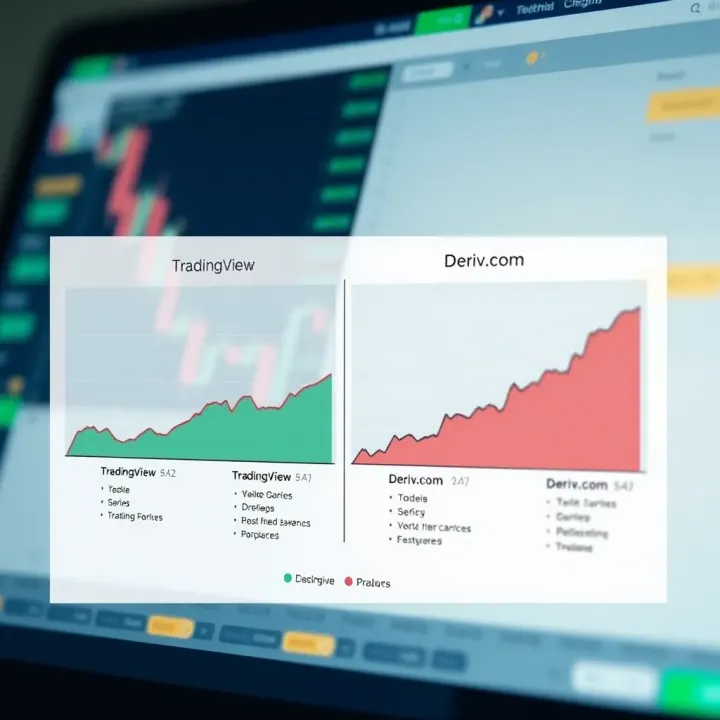
Compare TradingView 📈 vs Deriv.com 💹 for Nigerian traders 🇳🇬 with insights on features, usability, pricing, and regulations to pick the best platform.
Based on 9 reviews