
Understanding the New York Forex Session
📈 Explore the New York Forex session timing, market trends, and overlaps with other sessions. Learn strategies to boost your trading success! 💹
Edited By
Ethan Clarke
The New York forex session ranks among the busiest periods in global currency trading, drawing massive volumes and sharp price moves. For Nigerian traders, understanding when this session begins and ends, alongside its market impact, can greatly improve trading decisions and risk management.
The session officially opens at 8:00 am and closes at 5:00 pm Eastern Standard Time (EST). In Nigerian time, this translates to 1:00 pm until 10:00 pm during standard time. Traders should note that when Daylight Saving Time starts in the US, the session shifts by one hour, opening from 12:00 pm to 9:00 pm Nigerian time.
During this window, the New York session overlaps with the London session, known as the busiest overlap in the forex market. This period sees increased liquidity and volatility, as European and American traders are both active. Nigerian traders can benefit from this surge in market action, as tighter spreads and faster trade executions become the norm.
The New York session significantly shapes forex price movements due to the release of major US economic data and policy announcements from the Federal Reserve, which rarely fail to create sharp reactions.
Key currencies like the US dollar (USD), euro (EUR), British pound (GBP), and Nigerian naira (NGN) via US dollar pairs, typically display higher volume during this time. Watching these market rhythms helps traders anticipate breakouts, reversals, or trend continuations more effectively.
Be mindful of the US public holidays, which can reduce liquidity and cause unpredictable price swings.
Align trading strategies to the session’s high volatility zones.
Use tools like economic calendars to track scheduled data releases that can disrupt the market.
Consider shorter trade durations to capture swift market moves without overexposing capital.
Knowing the New York session’s timing and how it interplays with the broader forex market calibre empowers traders to sharpen their entry and exit points. With good timing and an informed approach, the session also provides ample opportunities to capitalise on price swings unique to active hours.
In the sections ahead, we will explore specific strategies Nigerian traders can apply during the New York forex session, along with examples of how market events influence currency behaviour.
The New York Forex session stands as one of the busiest and most influential trading periods in the global currency market. For Nigerian traders, understanding the traits and timing of this session is essential because it directly affects liquidity, volatility, and trading opportunities throughout the day. Given Nigeria’s position in the GMT+1 time zone, the New York session often overlaps with the late afternoon or evening hours locally, making it a popular period for active forex trading after work hours.
The New York Forex session refers to the time when the financial markets in New York City actively trade currencies. It officially begins at 8:00 am EST and closes around 5:00 pm EST, translating to 1:00 pm to 10:00 pm Nigerian local time during standard time. This session handles a significant share of the daily forex volume, largely because New York is a major financial hub hosting important banks, hedge funds, and institutional investors.
A unique feature of this session is its overlap with the London session for a few hours in the afternoon, where market activity and volatility often spike. This creates more trading opportunities and sharper price movements. For example, a trader dealing in GBP/USD or EUR/USD pairs will see much more action during these overlap hours compared to quiet periods like the Asian session.
The New York Forex session is crucial because it acts as a global liquidity centre where major economic news and data releases from the United States impact markets directly. USD-based currency pairs like EUR/USD, USD/JPY, and USD/NGN experience increased volume and volatility, giving traders the chance to capitalise on rapid price swings.
For Nigerian traders, this is particularly relevant since the naira’s exchange rate often responds to US economic indicators such as interest rate decisions by the US Federal Reserve, employment reports, and GDP figures. When these releases hit the market during New York hours, sharp movements can occur, requiring traders to manage risk carefully.
Traders should monitor the New York session closely, especially the first few hours, to take advantage of higher liquidity and clearer price trends that can translate to profitable trades.
Understanding the New York session helps traders know when to place trades, how to anticipate market moves, and how to allocate time for active trading. This insight, tied with knowledge of overlapping sessions and economic calendars, sharpens strategy and risk management for anyone serious about forex in Nigeria.
Knowing the exact trading hours of the New York forex session is vital for any serious trader. Timing affects volatility, liquidity, and the effectiveness of your trading strategies. For Nigerian traders, understanding these hours helps plan sessions around local time, especially when markets overlap with other key sessions.
The New York forex session typically opens at 8:00 am EST and closes at 5:00 pm EST. Nigeria operates on West Africa Time (WAT), which is UTC+1. Practically, this means that when New York opens at 8:00 am, it is 2:00 pm in Nigeria during non-daylight saving periods. The session then closes at 10:00 pm Nigerian time. Traders should note this window to time their activities accordingly.
For example, if you prefer trading in the afternoon or early evening, the New York session aligns perfectly with Nigerian business hours. During this period, liquidity peaks, making price movements more predictable and spreads generally tighter.
Daylight Saving Time (DST) changes the timing by one hour and occurs twice a year in the United States. From approximately mid-March to early November, the US shifts clocks forward by one hour. During this period, New York session starts at 8:00 am EDT, which is UTC-4, not EST (UTC-5).
For Nigerian traders, DST means the New York forex session runs from 1:00 pm to 10:00 pm WAT, advancing the session an hour earlier locally. This shift can affect trading strategies particularly for those who rely on news releases and market overlap times. Traders sometimes miss this adjustment and engage at wrong times.
Keeping track of daylight saving changes is not optional — it directly influences when markets open and the best periods for trading.
To stay efficient, use economic calendars or reliable platforms that adjust automatically for DST. That way, you avoid errors in timing your trades, especially when critical news reports or central bank announcements happen during New York hours.
Understanding these timing nuances enables Nigerian traders to engage forex markets more effectively, capitalising on peak liquidity and informed market moves during the New York session.
Understanding how the New York forex session fits alongside other major trading sessions helps traders anticipate market behaviour and plan their trades better. The New York session is closely linked with the London, Tokyo, and Sydney sessions, and these interactions influence liquidity, volatility, and price trends.
The overlap between the New York and London sessions is the busiest and most volatile period in the forex market. It happens roughly between 1:00 pm and 5:00 pm WAT (West Africa Time), when London is winding down and New York kicks into high gear. This overlap boosts liquidity significantly because two of the world’s top financial centres trade simultaneously.
For Nigerian traders, this is the prime window for forex trading due to big moves in major currency pairs like EUR/USD, GBP/USD, and USD/NGN. When these markets overlap, the bid-ask spreads tighten, and price moves can be swift and substantial. For example, if the US Federal Reserve releases surprising economic data during this time, you might see sharp reactions as both markets digest the news.
That said, volatility during this overlap means risk also rises. Traders must use strict risk management with stop-loss orders or reduce position sizes to navigate the swings effectively.
The Tokyo and Sydney sessions run earlier in the day compared to New York and London, usually from about 1:00 am to 9:00 am WAT for Tokyo, and roughly 10:00 pm to 6:00 am WAT for Sydney. These sessions are important but tend to have lower liquidity and volatility relative to the New York and London overlap.
Pairs like USD/JPY, AUD/USD, and NZD/USD are more active during Tokyo and Sydney hours. While the price movements are usually steadier, traders should not dismiss these sessions as low-impact. Seasonal news, especially from Asia-Pacific countries, can create unexpected spikes.
One key point is that activity in the Asian sessions sometimes sets the tone for the New York session later on. For instance, strong movements in USD/JPY early in the Tokyo session might influence how traders position themselves once New York opens.
For Nigerian forex traders, knowing these session overlaps and characteristics can sharpen entry and exit timing, letting you ride waves when liquidity peaks and avoid choppy markets at quieter hours.
In summary, the New York session doesn’t trade in isolation; it overlaps with London for the most action and follows quieter but significant Asian sessions. Awareness of these interactions allows more precise strategy planning tailored to Nigerian trading hours and market conditions.
Understanding the market characteristics during the New York session offers Nigerian forex traders a clear advantage, especially since this session accounts for a significant chunk of daily trading activity. Knowing when liquidity peaks, which currencies dominate, and how market moves react to news releases helps traders make smarter decisions and manage risks effectively.
Liquidity during the New York session is notably high compared to the Tokyo and Sydney sessions. This is mainly because New York overlaps with London’s market for about three to four hours daily. In this overlap period, trading volume surges, reducing spreads and allowing trades to execute swiftly. For example, a trader operating on platforms like GTBank’s trading desk or using Flutterwave’s payments solution might notice tighter bid-ask spreads during these hours, which cuts down transaction costs.
Outside the overlap, liquidity remains strong due to the presence of American banks, hedge funds, and institutional investors actively trading. This high activity means traders can enter and exit positions more confidently without worrying about slippage or gapped prices. That said, Nigerian traders should be cautious during the start of the New York session when liquidity may be slightly lower until US financial institutions fully enter the market.
The New York hours see intense activity in major US dollar (USD) currency pairs given the US market’s dominance. Pairs like USD/NGN, EUR/USD, GBP/USD, and USD/JPY draw the highest volume. Since the USD serves as Nigeria’s primary foreign exchange reference, Nigerian traders often focus on these pairs for their volatility and liquidity.
For instance, during the New York session, the USD/NGN rate reacts sharply to economic news or CBN announcements. Similarly, EUR/USD and GBP/USD pairs show strong movement due to the interplay between European and US market data releases and trading hours. Nigerian brokers such as Access Bank and Zenith Bank often provide tools highlighting these active pairs during New York trading times to aid traders.
The New York session is well known for its reaction to major economic reports and events. These include the US Non-Farm Payroll (NFP), Consumer Price Index (CPI) releases, and Federal Reserve interest rate statements. News like these tends to cause sudden spikes or dips in currency prices within minutes, creating both opportunities and risks.
Nigerian traders should monitor economic calendars closely, especially for scheduled releases around 1:30 pm to 3:00 pm WAT, when many US announcements come out. These times often see sharp volatility in USD pairs. For example, unexpected positive NFP numbers can strengthen the USD against the naira, impacting naira liquidity in the black market and official FX rates.
Staying aware of when these news releases happen can help traders avoid being caught on the wrong side of volatile moves or better position to benefit from them.
Overall, the New York session’s characteristics — high liquidity, dominant USD pairs, and sensitivity to US economic data — make it a critical time for forex traders in Nigeria. Mastery of these factors allows better timing and improved risk management in the often fast-moving forex market.
For Nigerian traders, understanding how to navigate the New York forex session can significantly impact trading outcomes. This session is one of the most liquid and volatile periods of the trading day, so having clear strategies tailored to its rhythm helps you spot opportunities and manage risks effectively. Since Nigerian local time overlaps with the session’s peak hours, particularly during the morning and early afternoon, knowing when to trade and how to respond to market moves is essential.
Trading during the overlap between the New York and London sessions tends to offer the most activity. For Nigerians, this coincides roughly between 1 pm and 5 pm local time, when both marketplaces operate simultaneously, increasing liquidity and price movements. These hours often generate sharp swings in popular currency pairs like USD/NGN, EUR/USD, and GBP/USD. For instance, a trader focusing on USD/NGN might find increased spreads and volume around 3 pm, allowing for better trade execution.
Outside the overlap, volatility can decrease, making it harder to capture significant price movements. Thus, targeting the first few hours after the New York session starts (about 12 pm to 3 pm Nigerian time) allows you to catch early momentum following major economic news or market reactions from the previous London close.
Since the New York session often triggers unpredictable swings, robust risk management is a must. Always set stop-loss orders to protect your capital against unexpected reversals, especially during news events or sudden liquidity shifts. For example, if you trade USD/NGN around the 2 pm US economic data release, placing a stop-loss within 0.5% to 1% of your entry point can prevent large losses from sudden spikes.
Avoid trading with oversized positions during high volatility hours. Instead, scale your trades conservatively and adjust them as market conditions evolve. Tracking your daily risk limit (say 1-2% of your trading capital) helps maintain consistency and prevents emotional decision-making.
Economic calendars are indispensable for timing trades during the New York session. Nigerian traders benefit from tracking key US economic releases like the Non-Farm Payrolls (NFP), Federal Reserve announcements, and CPI data, as these can trigger rapid price shifts. For instance, a surprise hike in US interest rates often strengthens the dollar, impacting USD/NGN and other dollar pairs.
Set alerts a few minutes before major news releases to pause open trades or reduce exposure. Websites like Investing.com and Bloomberg provide real-time economic calendars with Nigerian-friendly time zones, making it easier to plan your trading day. Incorporating these releases into your strategy reduces guesswork and helps you avoid being caught on the wrong side of sudden market moves.
Successful trading during the New York session hinges on knowing when to enter, how to manage risk wisely, and staying updated with economic events that move the market. Nigerian traders who build these habits can leverage the session’s activity to improve their trading results.
📈 Explore the New York Forex session timing, market trends, and overlaps with other sessions. Learn strategies to boost your trading success! 💹
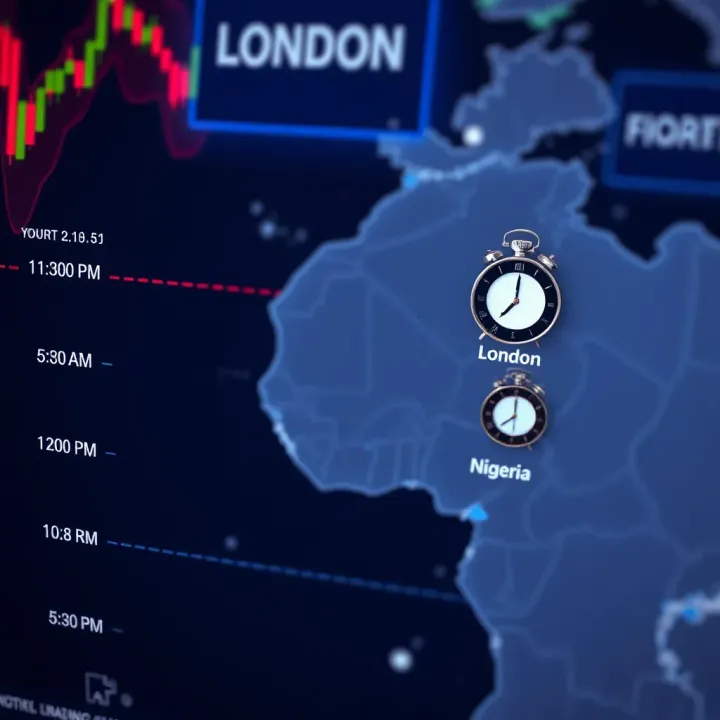
📈 Discover how the London forex session timings affect Nigerian traders ⏰ Learn to sync strategies with local time for better trading results in this global market.
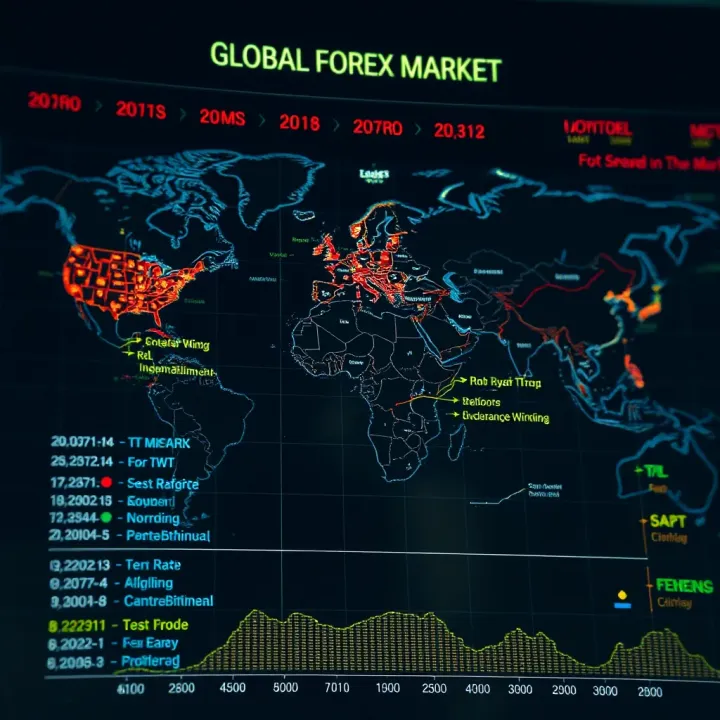
📈 Discover Nigeria's forex market hours and how global sessions impact your trading. Learn to navigate time zones and optimize your trading strategy effectively. 🌍💹
⏰ Learn how forex market hours align with Nigerian time, discover the best trading slots, tips for investors, and understand the Central Bank's role in regulation.
Based on 9 reviews