

XAU/USD Price Explained: Trends and Trading Tips
Explore what moves the XAU/USD price 🔍 Understand gold's value against the US dollar, market trends, and smart trading tips for smarter investments 📈💰
Edited By
Amelia Turner
Understanding the dynamics behind the US dollar to South African rand (USD/ZAR) exchange rate is vital for traders, investors, and businesses operating within or alongside the South African economy. This currency pair does not move arbitrarily; it responds to a blend of economic signals, political events, and market sentiment. Grasping these influences can help you make tactical decisions, whether you're hedging risks or seeking profit opportunities.
Several core drivers impact USD/ZAR movements. South Africa's dependence on commodities like gold and platinum means global demand and prices for these resources heavily sway the rand’s strength. For instance, a surge in gold prices often boosts the rand, as foreign exchange income from mining grows. Conversely, any slump in commodity prices tends to weaken the local currency against the dollar.
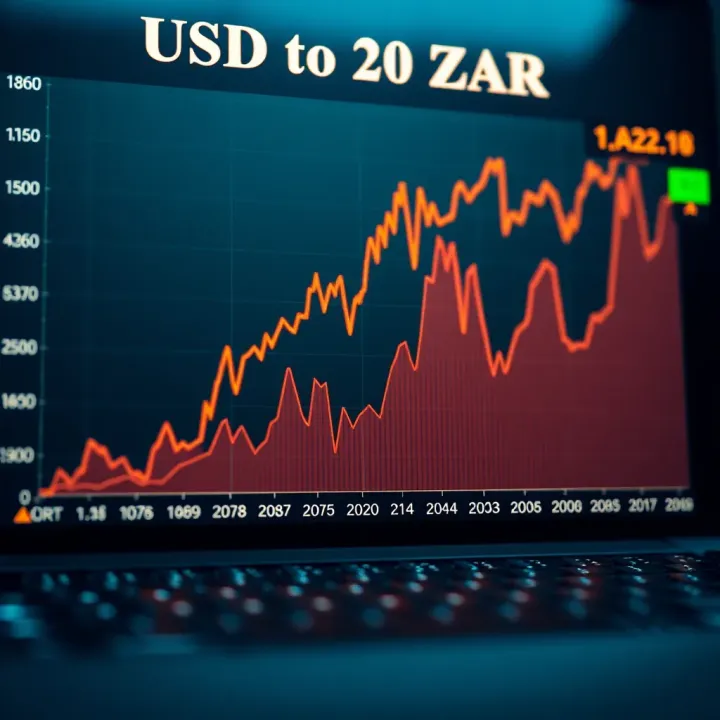
South Africa’s monetary policy, especially decisions by the South African Reserve Bank (SARB) regarding interest rates, also commands significant influence. Higher interest rates tend to attract foreign capital, supporting the rand, while cuts may prompt capital flight to the dollar or other assets. In recent years, SARB hikes to tame inflation have created short bursts of rand appreciation, but these effects can be offset by larger global trends.
Political stability remains another key factor. Elections, policy announcements, or unrest can raise uncertainty, often resulting in rand depreciation as investors seek the relative safety of the dollar. The 2019 South African general elections, for example, saw temporary rand volatility as markets assessed the continuity of economic reforms.
Market expectations and sentiment must not be overlooked. Sudden shifts in risk appetite, often triggered by global events such as US Federal Reserve policy changes, trade tensions, or crises in other emerging markets, cause fluctuations in USD/ZAR. Traders often react in anticipation, not just reaction, making forward-looking news just as impactful.
Monitor commodity prices regularly, especially gold and platinum.
Track SARB policy announcements and inflation reports.
Stay updated on South African political developments with potential economic consequences.
Watch US dollar trends closely through Federal Reserve communications and US economic data.
Use technical analysis in combination with fundamental insights to time entry and exit points effectively.
Understanding these factors and how they interplay will give you a firmer grip on the USD/ZAR exchange rate’s likely path, equipping you to navigate a market that can be as volatile as it is rewarding.
Understanding the Dollar to Rand (USD/ZAR) exchange rate is vital for traders, investors, and businesses, especially given South Africa's role as Africa’s largest economy and a key regional trade partner. This overview explains the relevance of the USD/ZAR pair within global financial markets and highlights its importance for practical decision-making in investments and trade.
The US dollar stands as the world's primary reserve currency, driving global trade and finance. Because of its stability and wide acceptance, many commodities and international transactions are priced in dollars. The South African rand, while less dominant globally, serves as a critical currency within Africa. It reflects South Africa’s significant mining sector and export activity, especially in gold and platinum. Movements in the USD/ZAR rate often signal broader trends in emerging markets and commodity prices, making it a benchmark for risk appetite across the region.
Although Nigeria uses the naira, many Nigerian businesses interact with South African firms and sourcce products from South Africa, making the USD/ZAR rate relevant. For importers, a stronger rand versus the dollar means higher import costs when converting from dollars to rand, which can affect pricing and profitability. Investors with exposure to South African equities or bonds monitor the USD/ZAR closely as currency volatility impacts returns when converting gains back into naira or other currencies. Additionally, forex traders in Nigeria often trade this pair due to its liquidity and volatility compared to domestic currency pairs.
Historically, USD/ZAR has shown periods of sharp moves during global economic shifts. For instance, in 2015, South Africa’s political uncertainty and a declining commodity market pushed the rand down sharply against the dollar. Similarly, the rand weakened significantly during the global financial crisis in 2008 when investors fled emerging markets. Understanding these turning points helps traders anticipate market reactions based on economic or political cues.
External shocks like changes in US Federal Reserve policy, global commodity price swings, and geopolitical events frequently impact the USD/ZAR rate. For example, sudden spikes in US interest rates often strengthen the dollar, putting pressure on the rand. The COVID-19 pandemic caused heightened volatility due to disruptions in trade and commodity demand, showcasing how unpredictable shocks can create rapid exchanges in the rate. Knowing these factors helps market participants manage risks and respond to sudden market movements effectively.
The USD/ZAR exchange rate serves as a vital indicator not just for South Africa but for the broader African economic climate. For Nigerian traders and investors, staying informed about this pair is key to navigating cross-border business and investment decisions confidently.
Understanding the drivers behind the USD/ZAR exchange rate is essential for traders, investors, and businesses looking to navigate currency fluctuations effectively. The exchange rate is shaped by a combination of economic indicators, monetary policies, and political developments from both South Africa and the United States, with wider geopolitical events also playing a part.
South Africa’s inflation rate directly impacts the purchasing power of the rand. Rising inflation usually weakens the rand as it erodes domestic currency value, which makes foreign goods cheaper and imports more attractive. For example, when South Africa experienced inflation spikes above 6%, the rand often faced downward pressure against the dollar. Interest rates set by the South African Reserve Bank (SARB) also influence the rand’s appeal. Higher interest rates can attract foreign capital looking for better returns, strengthening the rand. However, in cases where rates rise to combat inflation without corresponding economic growth, the effect can be mixed. GDP growth rates offer insight into the overall health of the economy. Robust GDP growth signals economic resilience and can support the rand, whereas stagnation or contraction tends to weaken it.
South Africa’s trade balance is another crucial factor. A trade surplus, often driven by strong commodity exports like gold, platinum, and coal, tends to support the rand as foreign buyers convert their currencies to pay for these goods. Conversely, a growing trade deficit can pressure the rand downward. Commodity prices are especially significant since South Africa relies heavily on natural resources exports. For instance, when platinum prices drop sharply, the rand typically weakens due to expected lower foreign earnings. Nigerian businesses involved in import or export with South Africa would closely watch commodity trends to understand how exchange rates might shift.
The US Federal Reserve’s (Fed) interest rate moves affect the dollar’s strength globally, including against the rand. When the Fed raises interest rates, it offers higher yields on dollar-denominated assets, attracting investment and pushing the dollar higher. This often results in the rand depreciating. For example, Fed hikes during 2022 led to sustained dollar strength against emerging market currencies including the ZAR. Traders should pay attention to Fed communications and minutes, which hint at future rate trends.
Key US economic releases like non-farm payrolls, inflation data (CPI), and GDP reports influence the dollar. Strong employment growth or rising inflation in the US often boosts expectations for Fed tightening, thereby strengthening the dollar. On the downside, weaker data can trigger dollar sell-offs. For Nigerian investors dealing with USD/ZAR, staying alert to such data helps anticipate short-term currency movements.
Political stability and policy clarity in South Africa directly affect investor confidence in the rand. Episodes of policy uncertainty, such as debates over land reforms or electricity supply challenges, have previously unsettled the currency. For instance, announcements around Eskom’s power crisis or delays in adopting new mining regulations have sometimes triggered rand weakness. Investors and traders must assess the political climate continuously, as sudden shifts can lead to sharp exchange rate swings.
Global factors like US-China relations, commodity supply disruptions, or geopolitical conflicts impact risk appetite worldwide. Emerging market currencies like the rand are often the first to suffer when investors seek safer assets during crises. For example, tensions in key trade routes or financial market turbulence tend to push the dollar up while weakening the rand. Nigerian businesses exposed to both currencies need to factor in these external risks as part of their exchange rate strategy.
Traders and investors should monitor these factors collectively, as their combined effects shape the USD/ZAR rate dynamically. Keeping updated on both South African and US developments will better position market participants to manage currency exposure effectively.
Summary: Key drivers behind the dollar to rand exchange rate include South Africa’s inflation, interest rates, GDP growth, trade balance, and commodity prices. On the US side, Federal Reserve policies and economic data significantly influence dollar strength. Political events in South Africa and global geopolitical shifts add further layers of risk and opportunity for traders and businesses handling USD/ZAR transactions.
Understanding the current market outlook and forecasts for the USD/ZAR exchange rate is vital for traders, investors, and businesses dealing across South African and US markets. This information helps stakeholders anticipate currency movements, manage risks better, and optimise transaction timing. For example, Nigerian exporters to South Africa can plan when to convert their sales proceeds to naira for better value, while importers can budget more accurately against changes in forex costs. Forecasts also guide investment decisions, offering a clearer picture of potential profit or loss stemming from exchange rate swings.
Over recent months, the USD/ZAR rate has shown marked volatility influenced by shifts in global risk appetite and domestic economic updates. The South African rand tends to weaken during periods of global financial uncertainty, such as when US Federal Reserve signals hikes in interest rates, which usually boost the dollar. Conversely, when commodity prices such as gold and platinum—key exports for South Africa—gain strength, the rand often finds some support. A practical outcome for Nigerian traders is the observation that sudden rand depreciation can lead to higher costs for South African goods, which may affect cross-border trade margins.
Investor sentiment plays a strong role in short-term USD/ZAR movements. Speculation often reacts sharply to political developments in South Africa, election cycles, or unexpected global events like shifts in China’s economic data. For instance, if investors perceive rising risks in South Africa's policy environment, many might exit rand holdings, pushing the exchange rate higher. Nigerian market players benefit by gauging such sentiment cues from news and financial reports, allowing them to adjust trading positions or hedge exposures before substantial currency moves occur.
Banks and forex firms usually rely on a mix of quantitative models and qualitative insights to forecast the USD/ZAR rate. Common methods include econometric models factoring in interest rate differentials, inflation rates, GDP growth, and commodity prices. Technical analysis also features prominently, using past price trends and chart patterns to identify probable future directions. These approaches help analysts produce range forecasts rather than exact figures, acknowledging inherent currency market uncertainties.
Key financial institutions often have a consensus outlook that reflects the prevailing economic conditions. For example, if several South African banks forecast a moderately weaker rand due to expected slower GDP growth and persistent inflation pressures, traders might interpret this as a cautionary signal to avoid speculative positions that bet on a rand recovery. Such shared projections serve as a useful reference for Nigerian investors and businesses aiming to make informed decisions in volatile forex conditions.
Staying abreast of current market trends and respected forecast models equips you with practical tools to navigate USD/ZAR currency fluctuations with more confidence and less guesswork.
By monitoring recent performance patterns and synthesising analyst views, Nigerian traders and financial professionals can better time their transactions, hedge effectively, and minimise unforeseen losses linked to USD/ZAR swings.
Navigating the USD/ZAR exchange rate is especially important for Nigerian traders and businesses dealing with South African partners or sourcing goods from the region. Fluctuations in this rate directly impact costs, pricing, margins, and competitiveness. Practical advice here helps Nigerian stakeholders to anticipate risks and seize opportunities in their cross-border dealings.
Hedging is a critical tool Nigerian importers and exporters can use to manage exposure to currency swings between the US dollar and South African rand. For instance, a Nigerian firm importing goods from South Africa may face increased costs if the rand strengthens against the dollar unexpectedly. Using hedging contracts, they lock in a rate beforehand, protecting against adverse moves. Similarly, exporters to South Africa receiving payments in rand might hedge to ensure they convert funds back to naira at favourable rates.
Common hedging approaches include forward contracts and currency swaps. For example, a trader might agree today with their bank on a forward contract to buy rand at a fixed rate in three months, securing cost certainty. Such strategies help Nigerian businesses avoid sudden price shocks, which can be critical during volatile periods such as ember months or election seasons.
Financial instruments like futures and options offer additional ways to manage USD/ZAR risks. Futures contracts allow Nigerian traders to buy or sell a currency at a future date and agreed price, giving certainty. Options provide the right, but not the obligation, to transact at a set price, adding flexibility in uncertain markets.
Using these instruments requires working with trusted forex brokers or banks familiar with South African and Nigerian markets. Though often associated with larger firms, fintech platforms and financial institutions in Nigeria are increasingly offering access to these instruments in more accessible packages. For instance, option contracts can protect against unfavourable exchange rate spikes without locking in transactions if conditions improve.
Reliable, timely information is essential. Nigerian traders should monitor exchange rate data from sources like the Central Bank of Nigeria (CBN), which publishes official rates linked to naira liquidity and interbank flows. Specialist forex market news providers and platforms such as Bloomberg, Reuters, and local financial newspapers also offer daily USD/ZAR updates highlighting market trends and economic news impacting rates.
In addition, Nigerian online trading platforms and fintech apps often provide real-time exchange rate quotes, alerts, and analysis tools tailored to users’ needs. Staying plugged into these resources helps traders catch early signals of volatility or trends that might affect their transactions.
Effective use of economic indicators and market analysis tools enhances decision-making. Nigerian businesses should look beyond headline rates to understand driving forces such as South African inflation figures, commodity prices (like platinum and gold), and US Federal Reserve policy announcements.
Tools like technical charting software, currency heatmaps, and sentiment indexes show patterns and investor moods impacting USD/ZAR. For example, if platinum prices drop significantly, traders can anticipate potential rand weakness, adjusting their hedging or procurement strategies accordingly. Regularly reviewing these indicators keeps Nigerian traders proactive rather than reactive.
Staying informed and managing currency risk actively can save Nigerian businesses thousands of naira and secure smoother trade cycles, regardless of how the USD/ZAR rate moves.
By combining hedging tools and solid information sources, Nigerian traders and businesses position themselves better to navigate the twists and turns of the dollar to rand exchange market.
Explore what moves the XAU/USD price 🔍 Understand gold's value against the US dollar, market trends, and smart trading tips for smarter investments 📈💰
Discover XT Exchange 🚀—explore its security, trading options, asset types, and customer support to make smart crypto trades in Nigeria 🇳🇬 today!
📈 Curious if the dollar rate will rise next week in Nigeria? Explore key economic signs, government moves, and global factors shaping the exchange rate.
🔍 Explore key insights on XRP's price, market trends, regulations, tech updates & risks to guide Nigerian traders on its future potential and challenges.
Based on 10 reviews