
Understanding Market Structures with Real Examples
Explore Nigeria's market types: perfect competition, monopolistic, oligopoly & monopoly. Learn key traits and real industry examples 📊🇳🇬
Edited By
Amelia Foster
XRP remains one of the most watched digital tokens in the cryptocurrency market, especially among traders and investors in Nigeria and beyond. Its value swings and regulatory attention continue to affect not only market sentiment but also its use in fintech applications across the country.
Recently, XRP prices have shown increased volatility. After hanging around ₦350 per token for several weeks, the price surged to nearly ₦450 in early March 2024 before settling near ₦420. This movement reflects global investor reactions to ongoing legal developments in the United States, where Ripple Labs — the company behind XRP — is battling the Securities and Exchange Commission (SEC) over classification issues.

The court's decisions on XRP’s legal status will likely shape its future accessibility and acceptance in major markets.
In Nigeria, XRP's importance extends beyond price speculation. Fintech startups use XRP to facilitate fast cross-border payments, benefiting from its low transaction fees and quick settlement times. For instance, platforms like Flutterwave and OPay have begun experimenting with integrated crypto solutions, where XRP is tested for remittance services due to its liquidity and scalability.
On the regulatory front, Nigeria's Securities and Exchange Commission (SEC Nigeria) remains cautious. While the government is yet to provide clear guidelines specific to cryptocurrencies like XRP, the ongoing monitoring reflects concerns over investor protection and anti-money laundering compliance. Industry experts predict that clearer rules from Nigerian regulators will encourage wider institutional adoption within the local fintech ecosystem.
Key factors influencing XRP's outlook include:
Global court rulings: Outcomes in the US case involving Ripple will affect market confidence and regulatory response worldwide.
Adoption by Nigerian fintech firms: Integration into payment platforms could boost XRP’s daily transaction volume domestically.
Naira volatility: Exchange rate fluctuations impact investor appetite for crypto assets, with some viewing XRP as a hedge against naira depreciation.
Traders and analysts find these developments significant. Understanding both international legal battles and Nigeria’s fintech landscape can help investors make informed decisions regarding XRP exposure.
In summary, while XRP’s market moves hinge on legal clarity abroad, its growing use in Nigeria's fintech space signals potential beyond speculation. Keeping an eye on regulatory updates and adoption trends will be vital for investors seeking to navigate this dynamic asset.
Understanding the recent market performance of XRP gives traders and investors a snapshot of how the coin behaves under current market conditions. This insight helps gauge potential risks and rewards, especially as the digital currency ecosystem rapidly evolves both globally and in Nigeria.
In global markets, XRP has displayed notable price shifts in recent months, riding waves of crypto market sentiment driven by regulatory news and technological updates. For instance, after Ripple’s partial legal victories, XRP prices saw short-lived spikes, highlighting how legal developments directly impact market confidence. However, these gains often face setbacks amid broader crypto market corrections or uncertainty.
Volatility in XRP is influenced by multiple factors: ongoing legal battles, changing regulatory frameworks, trading volumes, and global economic conditions. In Nigeria, where the Central Bank continues to adopt a cautious stance on cryptocurrencies, local market volatility can spike as news cycles influence retail interest, with investors reacting quickly to policy changes. This dynamic often leads to rapid price swings compared to traditional assets.
Comparing XRP to Bitcoin and Ethereum, XRP tends to have higher volatility due to its smaller market capitalisation and regulatory challenges. While Bitcoin serves as a store of value and Ethereum powers smart contracts, XRP’s use case in cross-border payments makes its price sensitive to partnerships and adoption news. Investors in Nigeria should note these differences; Bitcoin and Ethereum offer relative stability whereas XRP can yield higher, though riskier, returns.
Trading activity for XRP on Nigerian platforms such as Binance Nigeria and international exchanges like Binance and Kraken has shown increased interest since early 2024. This uptick reflects growing investor appetite, especially among retail traders looking to diversify beyond Bitcoin and Ethereum. Higher trading volumes contribute to improved liquidity, making it easier to enter or exit positions without major price impact.
Institutional involvement in XRP remains more limited compared to other leading cryptocurrencies but has been growing slowly with Ripple's efforts to build relationships with financial sectors. Some Nigerian investment funds and fintech ventures are cautiously adding XRP to their portfolios as part of larger crypto baskets. Meanwhile, retail investors in Nigeria continue to drive most market action, often responding to price momentum and market chatter on social media.
Market sentiment significantly influences XRP liquidity. Positive news—such as new partnerships or legal progress—boosts buying interest and trading volumes, while negative developments prompt sell-offs, tightening liquidity. For Nigerian investors, this means keeping a close watch on global and local news cycles can help anticipate periods of volatility or stable trading conditions.
Traders must weigh both global dynamics and Nigerian-specific factors like regulatory updates to make informed decisions on XRP positions.
Nigeria’s growing crypto community and fintech innovations increase XRP’s local trading activity.
Volatility presents trading opportunities but also demands disciplined risk management.
Comparing XRP’s behaviour with Bitcoin and Ethereum helps investors balance portfolios.
In sum, recent market performance analysis is key for understanding XRP’s place in the crypto scene within Nigeria and beyond.
Legal and regulatory issues around XRP directly influence its market value and adoption, making this topic vital for traders, investors, and stakeholders in Nigeria's fast-growing crypto scene. Understanding the ongoing legal battles, especially the lawsuit involving the U.S. Securities and Exchange Commission (SEC), helps shed light on risks and opportunities tied to XRP investments worldwide, including Nigeria.
The core legal battle involves Ripple Labs, the company behind XRP, and the SEC. The SEC alleges that Ripple conducted an unregistered securities offering by selling XRP tokens. Ripple disputes this, arguing that XRP functions more like a currency rather than a security. For investors, this case is far from abstract; its outcome determines whether XRP faces stricter regulation or gains clearer legitimacy.
Currently, the lawsuit is in advanced stages with partial rulings offering some clarity. Ripple has won decisions that suggest XRP tokens sold outside the U.S. may not be securities. However, full resolution is still pending, keeping market participants on edge. The long timeline has caused price swings and hesitation among institutional investors globally.
The SEC suit's conclusion will shape XRP's future access to regulated markets and affect investor confidence locally and abroad.
For Nigerian crypto investors, this case signals caution. If XRP is officially classified as a security, trading platforms in Nigeria may face pressure to comply with additional regulations or even delist XRP. Conversely, a Ripple win could encourage wider adoption and attract more fintech firms to integrate XRP into local payment solutions.
The Central Bank of Nigeria (CBN) has a cautious position on cryptocurrencies. Although the CBN restricted Nigerian banks from facilitating crypto transactions in 2021, interest in cryptocurrencies like XRP persists among Nigerians, especially in peer-to-peer markets and fintech startups. The CBN's recent statements focus on consumer protection and anti-money laundering measures rather than outright bans.
This restrained approach means XRP trading in Nigeria thrives informally or through unregulated platforms. However, Nigerian policies on crypto remain a moving target. Traders should monitor changes closely, as renewed crackdowns could affect liquidity and ease of access.
Fintech regulations in Nigeria are improving, with the Securities and Exchange Commission (SEC Nigeria) unveiling frameworks to guide digital assets and exchange operations. Notably, there's ongoing discussion about licensing crypto exchanges and setting clear rules for digital token custody. These changes could boost XRP’s integration in fintech platforms by fostering trust and transparent operation.
Several startups have quietly begun exploring XRP payments and remittances, encouraged by these regulatory shifts. Nigerian firms see an opportunity in XRP’s low-cost, fast transfer features for the large diaspora market. However, wider adoption depends on smoother regulatory clarity and infrastructure support.
In summary, keeping an eye on legal developments and Nigerian regulations is key for anyone involved with XRP. They shape the token's trading environment and determine its adoption prospects in Nigeria’s fintech ecosystem, where innovation competes with regulatory caution.
XRP has carved a niche, especially in payments and remittance sectors, by tackling challenges of speed and cost that traditional methods often face. This section explores how XRP is used for cross-border payments and its integration within Nigerian fintech platforms, offering tangible benefits to traders, investors, and professionals keen on the cryptocurrency landscape.
XRP facilitates transactions at a fraction of the time and cost compared to conventional banking channels. Its digital ledger operates swiftly, allowing value transfer anywhere globally within seconds, often charging mere cents in fees. This efficiency is particularly crucial for sectors like remittance, where delays and high costs usually eat into senders’ funds.
Banks and remittance firms have taken to XRP to cut intermediary steps that inflate both time and charges. Firms like Santander and MoneyGram have trialled XRP-based corridors for instant liquidity across borders, demonstrating the token’s practical advantages in real-world money movement.
Nigeria’s diaspora remittances benefit directly from XRP’s capabilities. With millions in foreign exchange inflows monthly, faster and cheaper transfers mean more value reaching families at home. As costly fees and delays frustrate many Nigerians relying on funds from abroad, XRP shines as an alternative worth watching.
Several Nigerian fintech startups are exploring XRP’s payment potential to improve transaction speed and reduce reliance on costly currency exchanges. Platforms such as PayAttitude and Bitmama are experimenting with cryptocurrency payments, including XRP, to offer users quick and cheaper transfers domestically and internationally.
Meanwhile, exchanges like Quidax and BuyCoins have listed XRP, enabling traders and users easier access for buying, selling, and transferring the token. These platforms provide vital infrastructure for XRP adoption, aligning well with Nigeria’s growing appetite for digital assets.
That said, local adoption faces challenges such as limited public awareness about XRP, volatile regulatory policies especially from the Central Bank of Nigeria (CBN), and power and internet connectivity issues that can disrupt seamless digital operations. However, these challenges co-exist with opportunities: growing fintech innovation hubs, rising smartphone penetration, and a young population eager for alternative financial services.
In the context of Nigeria's fintech ecosystem, XRP's promise lies in cost-effective, fast payments that resonate well with the needs of everyday Nigerians and businesses reliant on cross-border remittances.
The continued evolution of XRP’s role will depend on regulatory clarity and increased collaboration between fintech innovators, financial institutions, and tech developers to build trust and functional solutions tailored to Nigerian realities.
Technological developments and network updates play a significant role in defining XRP's competitiveness in the crowded cryptocurrency space. Keeping up with these advancements is crucial, especially for traders and financial professionals monitoring XRP’s capacity to handle increasing transaction demands and maintain security. Ripple’s continuous improvements directly affect how efficiently XRP can be integrated into payments systems, including those serving Nigeria's fintech ecosystem.
Recent upgrades to the Ripple protocol and XRP ledger have focused on enhancing scalability and efficiency. For instance, the introduction of the "Fee Escalation Mechanism" addresses network congestion by adjusting fees dynamically based on traffic. This means during peak usage, transaction costs increase slightly, but overall network stability remains intact. This practical move helps maintain reliable throughput without compromising affordability for users.
Besides, Ripple’s protocol updates include better support for multi-currency transactions on the XRP ledger. This feature allows tokens other than XRP, such as stablecoins, to settle quickly with minimal fees. For Nigerian fintech companies handling local currency-pegged tokens, these upgrades could simplify cross-border transfers while reducing operational hurdles.
Improved transaction speed and cost efficiency remain the top benefits of these updates. Ripple transactions often settle in under 4 seconds with fees well below ₦100, making it economically feasible for micropayments and remittances. Security enhancements also accompany these changes; cryptographic algorithms and ledger validation methods receive regular patches to protect against evolving cyber threats, reassuring investors about asset safety.
Looking ahead, Ripple plans to explore integrating zero-knowledge proofs (ZKPs) to enhance privacy while maintaining transparency on the ledger. Adoption of ZKPs would allow transactions to be verified without revealing sensitive details, an attractive feature for institutional players worried about data confidentiality. Such advanced cryptography could position XRP as more than just a payment token but a privacy-conscious digital asset suited for stringent regulatory environments.
User protection and fraud prevention receive continual attention within Ripple’s ecosystem. They have implemented multi-signature (multi-sig) wallet features and hardware wallet compatibility, reducing risks of unauthorised access. For Nigerian investors who often face cyber fraud risks, these security layers offer practical benefits for safeguarding holdings. Additionally, Ripple supports real-time monitoring tools that identify suspicious transactions promptly, helping exchanges maintain trust.
Ripple's compliance with international standards includes alignment with FATF’s (Financial Action Task Force) recommendations concerning anti-money laundering (AML) and combating the financing of terrorism (CFT). These compliance efforts encourage partnerships with regulated banks and payment providers, expanding XRP’s global acceptance and providing Nigerian businesses confidence when dealing with foreign counterparts.
Locally, Nigeria-focused security concerns shape Ripple's approach. Considering frequent power outages and internet disruptions, the network ensures robustness to handle intermittent connections without data loss or transaction reversal. This reliability is critical in Nigeria’s context where connectivity challenges can affect financial service delivery. Moreover, Ripple collaborates with local fintechs to educate users on best security practices, closing gaps in public awareness about wallet protection and phishing scams.
Continuous technological upgrades and dedicated security measures ensure XRP stays reliable, cost-effective, and safe—qualities Nigerian traders and institutional investors highly value in the evolving crypto landscape.
The technological strides Ripple makes signal clear commitment to adapting XRP for both global and Nigerian-specific needs, promising a resilient future for users seeking efficient, secure digital asset use.
Looking ahead, understanding the future outlook and potential challenges for XRP is essential for traders, investors, and finance professionals. This section focuses on market predictions, expert opinions, and issues specifically affecting Nigeria. Analysing these factors offers practical insights for strategic decisions and managing risks in an evolving crypto landscape.
Experts generally see mixed signals about XRP’s price trajectory. Some analysts expect steady growth, provided Ripple wins its ongoing lawsuit with the U.S. Securities and Exchange Commission (SEC), signalling regulatory clarity that often boosts investor confidence. For instance, a positive ruling might push XRP beyond previous price levels, attracting more institutional investors. Conversely, sceptics highlight volatile swings driven by speculative trading and regulatory uncertainties worldwide.
Potential catalysts for XRP include expanding partnerships with banks and payment providers, increasing use in cross-border remittances—especially relevant for Nigeria’s large diaspora—and possible incorporation in more fintech solutions. However, risks such as unfavourable litigation outcomes, global crypto market downturns, or policy crackdowns could stall growth or trigger sharp price drops.
Comparing XRP to other digital assets like Bitcoin and Ethereum shows clear distinctions: XRP focuses on payment efficiency, while Bitcoin is often seen as digital gold, and Ethereum thrives on smart contracts. In Nigeria, Bitcoin remains dominant for store of value, but XRP’s faster transaction speeds and lower costs suit specific payment and remittance use cases. Globally, competitive pressures from newer blockchain projects also shape XRP’s outlook, urging continuous tech upgrades to stay relevant.
Regulatory hurdles remain significant for XRP in Nigeria. The Central Bank of Nigeria’s (CBN) cautious stance and unclear rules create uncertainty for exchanges and investors. For example, the 2021 directive that banks halt crypto dealings disrupted trading and dampened investor enthusiasm. Until comprehensive frameworks emerge, XRP adoption risks slow growth despite technology advantages.
Public awareness and adoption barriers also limit XRP’s reach locally. Most Nigerians still associate cryptocurrencies mainly with speculative trading rather than everyday payments. Limited understanding of XRP’s benefits makes user uptake slow, especially outside major urban centres. Increased education and transparent communication from fintech firms could help bridge this gap.
Infrastructure challenges add another layer of difficulty. Nigeria’s irregular power supply and unreliable internet, particularly in rural areas, hinder seamless cryptocurrency transactions. Even in Lagos, network outages or high data costs restrict consistent access to XRP trading platforms and wallets. Until connectivity improves and more affordable data plans become widespread, many potential users may remain excluded from the growing crypto economy.
For investors and fintech players in Nigeria, recognising these market and local obstacles helps tailor strategies that are both ambitious and grounded in reality. Staying updated and agile will be key to leveraging XRP’s true potential amid shifting dynamics.
Explore Nigeria's market types: perfect competition, monopolistic, oligopoly & monopoly. Learn key traits and real industry examples 📊🇳🇬
📈 Discover XRP price insights and expert analysis tailored for Nigerian investors. Understand market trends, risks, and XRP's potential future to make smart choices.

📈 Discover Nigeria's forex market hours and how global sessions impact your trading. Learn to navigate time zones and optimize your trading strategy effectively. 🌍💹
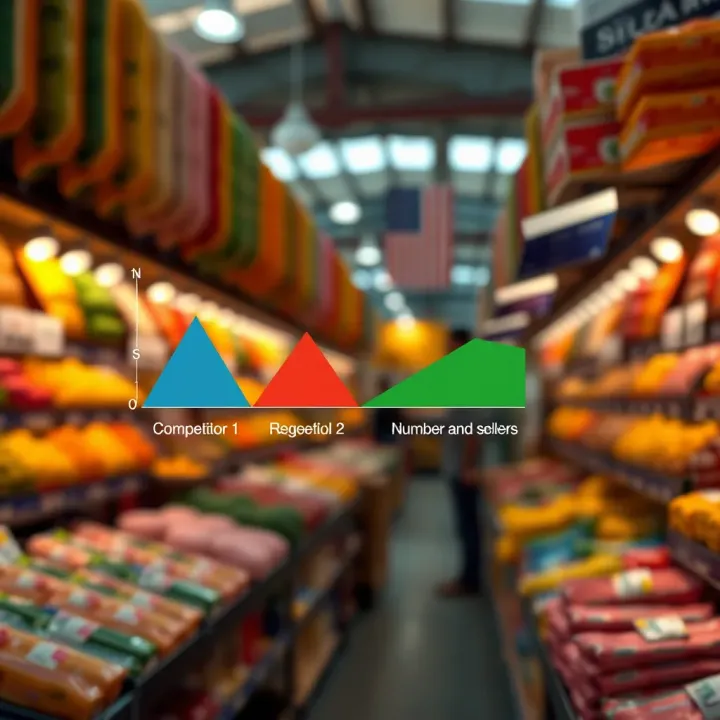
📊 Dive into Nigeria's market structures! Learn how competition, sellers, and control shape local economies with clear, practical insights.
Based on 6 reviews