
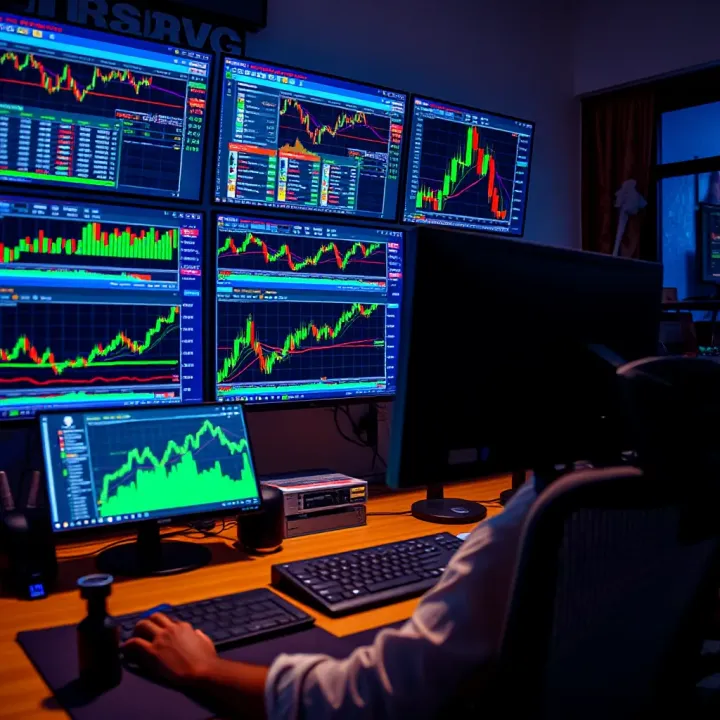
Nigeria's Top Forex Trader and Their Success Story
Discover Nigeria's top forex trader 🤑, their journey, trading challenges, and key lessons. Get insider insights into Nigeria's forex market dynamics 📊.
Edited By
Benjamin Reid
Nigeria’s forex market has witnessed significant growth over the past decade, making it a hotspot for ambitious traders aiming to turn ₦50,000 into millions. Among these traders, a select few have risen above the rest, building wealth through strategic currency trading and sharp market insights. Identifying the richest forex trader in Nigeria offers valuable lessons in skill, perseverance, and adapting to local market challenges.
One notable example is Emmanuel Eze, a Lagos-based trader whose portfolio reportedly exceeds ₦2 billion. Starting from humble beginnings, Emmanuel used a combination of technical analysis and disciplined risk management to navigate Nigeria’s volatile forex environment. He favours currency pairs involving the US dollar (USD), euro (EUR), and Nigerian naira (NGN), balancing international trends with local economic indicators.
“Understanding the naira’s behaviour, especially against the backdrop of CBN policies and naira volatility, is key to consistent profits,” Emmanuel once shared in a trading seminar.
Several factors contribute to the success of top forex traders in Nigeria:
Deep market knowledge: Staying updated on global economic shifts and local regulatory moves.
Risk control: Limiting exposure to large losses by using stop-loss orders and position sizing.
Leveraging technology: Using platforms like MetaTrader, plus Nigerian fintech integrations such as Paystack and Flutterwave for efficient fund movement.
However, the Nigerian forex scene is not without obstacles. Regulatory bodies like the Securities and Exchange Commission (SEC) and the Central Bank of Nigeria (CBN) impose rules that traders must navigate carefully. Challenges around foreign exchange availability, naira devaluation, and occasional power outages can disrupt trading activities. Traders who succeed find ways to work with these conditions instead of against them.
For anyone eyeing a place among Nigeria’s top forex traders, practical steps include:
Developing a solid grasp of both technical and fundamental analysis.
Consistently practising demo trading to refine strategies.
Keeping abreast of CBN exchange rate policies and the wider economic context.
With Nigeria’s financial sector transforming rapidly, forex trading offers a promising avenue for wealth creation. Appreciating the profiles and methods of the richest traders provides a roadmap for aspiring investors ready to navigate this competitive market.
Understanding who the richest forex trader in Nigeria is sheds light on the practical pathways and strategies that bring success in this competitive market. This knowledge not only satisfies curiosity but also offers valuable lessons for traders and investors aiming to navigate Nigeria's complex forex scene effectively. By profiling the top trader, readers gain insights into the qualities and decisions that distinguished them from others.
The richest forex trader in Nigeria typically has a background that blends formal education and self-taught financial knowledge. For instance, many successful traders hold degrees in economics, finance, or related fields from Nigerian universities like the University of Lagos or Ahmadu Bello University. This educational foundation provides them with essential analytical skills necessary to interpret market trends and economic data.
However, education alone is not sufficient; practical experience and continuous learning play significant roles. Some traders come from humble beginnings, growing up in modest neighbourhoods, but they invest time in understanding forex markets through online resources, seminars, and mentorship programs.
Most top forex traders in Nigeria started trading as a side hustle while working regular jobs or running small businesses. Entry often involves demo trading to learn risk management and market behaviour without real losses. Some traders began by capitalising on the naira's volatility, especially during economic shifts like the 2016 naira devaluation.
Early access to trading platforms like MetaTrader or local brokers provided the foundation to build their skills. Their ability to adapt to Nigeria’s unique forex challenges — such as fluctuating exchange rates and limited internet infrastructure — distinguished them from casual traders.
Key milestones include consistent profit-making across difficult market periods and building investment portfolios beyond forex, such as real estate or startup ventures. Some have featured in financial media, taking roles as educators or mentors, which elevated their influence and credibility.
Recognition from bodies like the Securities and Exchange Commission (SEC) or fintech awards also mark significant achievements. These milestones reinforce their resilience and strategic foresight, serving as benchmarks for aspiring traders.
The primary source of wealth for Nigeria's richest forex traders is their trading profits, accumulated over years of disciplined, strategic trading. Successful traders often diversify into longer-term investments such as stocks on the Nigerian Exchange (NGX), government bonds, or foreign currencies, locking in gains and mitigating risks.
Their stakes in emerging fintech companies or commodity trading also contribute significantly to their net worth. For instance, holding shares in payment platforms like Paystack or OPay adds to their financial portfolio outside daily trading activities.
Beyond forex, many have branched into real estate development, agriculture, or tech startups. These business ventures create multiple income streams, reducing dependence on the unpredictable forex market.
Some also invest in education services, offering forex training courses or creating content to nurture new traders. This not only secures additional revenue but also helps formalise trading knowledge in Nigeria.
While exact figures remain private, estimates of their net worth typically run into hundreds of millions of Naira, sometimes reaching the low billions, depending on forex performance and business holdings. Financial publications and interviews provide glimpses into their success but often emphasise their focus on sustainable growth rather than flashy wealth.
The story of Nigeria's richest forex trader is a practical example of how skill, perseverance, and smart diversification combine to build lasting financial success in a challenging environment.
This profile offers actionable insight, helping traders understand what it takes to thrive in Nigeria's forex industry and beyond.
Understanding the trading strategies behind Nigeria’s richest forex traders offers practical insights for anyone looking to profit in the volatile forex market. Their success is rarely a matter of luck but hinges on a solid combination of technical and fundamental analysis, backed by disciplined risk management. These strategies shape decision-making, minimise losses, and maximise returns amid the naira’s fluctuations and global financial dynamics.
Technical analysis relies on charts and statistical tools to forecast future price movements. The richest Nigerian forex traders typically use a mixture of indicators like the Relative Strength Index (RSI), Moving Averages (MA), and Fibonacci retracement levels. These indicators help them spot market trends and potential reversal points. For example, spotting a bullish RSI divergence on the USD/NGN chart might signal a buying opportunity.
Chart patterns such as head and shoulders, double tops, or triangles also play a crucial role. Traders carefully observe these shapes to anticipate breakouts or breakdowns, enabling timely entry or exit. This hands-on approach allows them to respond quickly to changes rather than relying on hearsay.
Managing risk separates successful traders from amateurs. Pros often limit exposure to 1–2% of their portfolio on any single trade, reducing the potential damage from a wrong call. Stop-loss orders are standard tools, automatically closing positions when prices hit a predetermined level.
Beyond these, successful Nigerian traders monitor volatility closely, especially during volatile periods like ember months when economic uncertainties peak. They diversify their trades across currency pairs, including stable majors like EUR/USD and spiritually volatile pairs involving the naira, to cushion against sudden market swings. This calculated restraint helps them stay afloat despite the unpredictability.
Fundamental analysis examines economic indicators that influence currency values. In Nigeria, data like inflation rates, GDP growth, crude oil production figures, and Central Bank of Nigeria (CBN) monetary policies heavily affect the naira’s strength. For instance, a sudden rise in inflation or an unfavourable CBN interest rate decision usually weakens the naira, impacting forex positions.
Savvy traders keep close tabs on official releases from the National Bureau of Statistics and CBN announcements. When the government announces a cut in fuel subsidy or a change in foreign exchange policy, immediate price reactions often follow. Traders who factor these into their positions can avoid losses or capitalise on opportunities early.
Global events and economic trends also sway Nigeria’s forex market. Dollar strength, geopolitical tensions, commodity price shifts, and international interest rates drive movements in emerging market currencies including the naira.
For example, a hike in US Federal Reserve rates typically strengthens the dollar against other currencies, often increasing pressure on the naira. Additionally, shifts in crude oil prices—Nigeria's main export—significantly affect forex liquidity and exchange rates.
Successful traders maintain a global outlook, monitoring news about US economic data releases, OPEC decisions, or China’s demand for commodities. Combining this information with local fundamentals gives them a fuller picture and improves trading accuracy.
A well-rounded trading strategy mixes technical precision with fundamental understanding, tuned to Nigerian realities and global currents. This blend is what sets the richest forex traders apart from the average market participant.
Navigating the Nigerian forex market comes with several distinctive challenges. These barriers influence how traders operate, shaping their strategies and overall success. Understanding the key obstacles can help traders make informed decisions and adapt better to local conditions.
Role of the Securities and Exchange Commission (SEC)
The Securities and Exchange Commission (SEC) regulates financial markets in Nigeria, including forex trading. Its mandate is to protect investors and ensure transparency. Traders must deal with SEC rules to avoid falling into illegal trading schemes. For instance, unregistered brokers often promise unrealistic returns, but they lack oversight, putting investors at risk.
Importance of registered brokers
Working with brokers registered by the SEC is essential. Registered brokers operate within legal frameworks, providing some level of security for traders' funds and data. Nigerian traders should verify broker credentials through SEC’s official listings before committing capital. This step helps reduce exposure to scams that have plagued the local market, especially from operators exploiting limited regulation awareness.
Naira devaluation issues
Naira’s frequent devaluation drastically affects forex trading outcomes. For example, sudden drops in the ₦/US$ exchange rate can lead to unexpected losses, even when traders have sound strategies. This volatility reflects Nigeria’s reliance on oil revenues and external shocks, making consistent profit difficult without tight risk controls.
Effect of political and economic instability
Political uncertainty, such as election periods or policy shifts, tends to worsen market fluctuations. Economic factors like inflation spikes, fuel scarcity, or fiscal deficits also play a role. These tensions create a rollercoaster effect on currency pairs, forcing traders to constantly reassess their positions and sometimes exit trades prematurely to avoid heavy losses.
Internet infrastructure limitations
Stable internet is a lifeline for any forex trader. Yet, Nigerians often face intermittent connectivity that disrupts real-time market access. For example, slow or dropped connections during major market moves can cause missed opportunities or forced close-outs. Traders in rural areas or relying on low-quality providers feel this effect more severely.
Sensitivity to power supply and costs
Regular power outages and high generator fuel expenses remain a big headache. Trading demands continuous attention, especially in volatile markets. A sudden blackout means missing critical price movements, while fuel costs can eat into profits. Traders often weigh costs carefully, balancing electricity spending against potential gains, especially during ember months when power supply issues tend to worsen.
Trading forex in Nigeria demands more than just knowledge; it requires navigating regulatory, economic, and infrastructural hurdles unique to the country’s context. Awareness and preparation on these fronts improve the odds of sustained success.
By facing these challenges head-on, Nigerian forex traders can develop resilience and strategies tailored to local realities, improving their chances of long-term gains.
Technology plays a key role in how Nigerian forex traders operate, influencing both access and profitability. Efficient trading relies heavily on platforms that deliver real-time data, prompt execution, and reliable connectivity. For traders, especially those competing globally, the integration of modern technology levels the playing field, allowing them to manage risks and seize opportunities effectively despite local infrastructural challenges.
MetaTrader remains the top choice among Nigerian forex traders due to its comprehensive suite of tools, including customisable charts, technical indicators, and automated trading capabilities. The platform supports both MetaTrader 4 and 5 versions, offering flexibility in strategy execution. While international, many brokers operating in Nigeria integrate MetaTrader, ensuring traders can rely on a globally recognised system.
Aside from MetaTrader, local fintech companies have developed platforms tailored to Nigerian traders’ needs. These platforms often incorporate direct integration with Nigerian banks for fund transfers and are optimised for lower bandwidth environments. For example, some platforms enable trading with modest internet speeds, which is crucial in parts of Nigeria where connectivity can be irregular.
Mobile apps designed for forex trading prioritise user-friendly interfaces to accommodate both novices and experienced traders. Clean layouts, simple navigation, and step-by-step order placement processes reduce the learning curve. For Nigerian traders balancing trading with other commitments, the ability to monitor and execute trades on smartphones or tablets without complex setups is invaluable.
Accessibility also ties to affordability—many apps provide free demo accounts and low minimum deposits, allowing Nigerians to experiment before committing real funds. This approach reduces barriers for young traders, who often face challenges in accessing capital and sophisticated training.
One practical benefit fintech brings to Nigerian forex trading is ease of funding accounts. Seamless integration with major banks like GTBank, Zenith Bank, and Access Bank enables instant deposits and withdrawals, helping traders react quickly to market changes. This instant access contrasts sharply with earlier days when international wire transfers could take days and attract high fees.
Such efficiency enables better cash flow management, critical for maintaining margin requirements or exiting trades promptly. Platforms that partner with local banks eliminate foreign exchange hassles and give traders confidence, especially when dealing with volatile naira exchange rates.
USSD codes remain popular in Nigeria for quick banking transactions without internet, and their integration into forex platforms is a game changer for accessibility. Traders can fund their accounts straight from their phone dial pad, bypassing data costs or connectivity issues. This convenience enhances participation from traders in less urbanised areas.
E-wallet services like OPay, PalmPay, and Kuda offer smooth, low-fee transactions, further easing deposits and withdrawals. Their mobile app ecosystems often include notifications and records that help traders track spending, deposits, and earnings efficiently. This organisational support plays a subtle but meaningful part in successful trading.
In Nigeria, the blend of robust mobile apps and fintech payment solutions empowers traders to navigate a complex market with greater confidence and speed.
The synergy between technology and forex trading success lies in overcoming local infrastructural and financial barriers. For Nigerian traders, the right platform paired with seamless payment options is often the difference between capitalising on market moves and missing out due to procedural delays or technical failures.
Aspiring forex traders in Nigeria face a unique blend of opportunities and risks. To navigate this market successfully, practical advice is vital. This section offers actionable guidance on building the right foundation, picking trustworthy brokers, and managing risk wisely. These steps help traders avoid common pitfalls and increase their chances of decent returns.
Before putting real money on the line, mastering the basics of forex trading is essential. Courses offered by established platforms like Coursera or Udemy, and resources from Nigerian fintechs such as Paystack’s educational modules, provide accessible ways to learn. A proper grasp of trading concepts, technical analysis, and market behaviour enables traders to make informed decisions rather than rely on guesswork or hearsay.
Demo trading is a critical next step. Through simulated accounts, traders practise their strategies without the risk of losing capital. This hands-on experience reveals the emotional and technical challenges of live trading. For instance, understanding how to respond to sudden naira volatility under demo conditions can save ₦50,000 or more when real money is involved.
Choosing the right broker is a matter of due diligence. Always verify a broker’s registration status on the Securities and Exchange Commission (SEC) Nigeria website. Registered brokers comply with regulations and provide safeguards such as segregated client funds and transparent commissions, reducing the risk of fraud.
Traders should watch out for red flags like unrealistic promises of guaranteed profits, lack of verifiable contact details, or demands for upfront payments beyond normal trading deposits. Scam brokers often disappear after collecting fees or manipulate prices to trigger losses. Sticking with well-known brokers like Verifone, Blueberry Markets, or one with a strong local presence helps avoid such traps.
Effective money management separates successful traders from reckless ones. Using tools like stop-loss orders to limit downside exposure for each trade guards against devastating losses. It is prudent to risk only a small percentage, say 1 to 2 percent of trading capital, per position. This approach preserves resources for when better setups appear.
Discipline is equally important. Holding onto profitable positions too long out of greed can wipe away gains quickly. Traders must stay calm during losing streaks, avoid chasing markets, and stick to their plans. For example, a trader who aims for consistent monthly returns of 5 percent rather than chasing double-digit gains is often more sustainable in Nigeria’s volatile forex environment.
Success in forex trading is less about luck and more about preparation, patience, and prudence. Building skills, choosing the right partners, and managing risks will pay off over time.
With this advice, aspiring Nigerian traders can approach the forex market with greater confidence and realistic expectations.
Discover Nigeria's top forex trader 🤑, their journey, trading challenges, and key lessons. Get insider insights into Nigeria's forex market dynamics 📊.
Discover Bill Lipschutz's journey in forex trading 📈, his unique strategies, and valuable lessons for traders aiming to succeed in the financial market 💹.
Discover what sets top forex traders in Nigeria apart 🇳🇬. Learn key traits, winning strategies, and the trading environment that fosters success 📈.
Explore how female binary options forex traders on Instagram share strategies, build a community, face challenges, and navigate regulations 📊👩💼📈
Based on 5 reviews